Showing posts with label IT Management. Show all posts

Sunday, September 18, 2011

IT Management » Windows 8 May Have Devs Reaching for Painkillers

Posted by echa 10:41 AM, under | No comments

Windows 8 May Have Devs Reaching for Painkillers | IT Management Microsoft's Windows 8 operating system will arrive on both tablets and traditional PCs when it debuts, and when it does, developers may have a lot of work ahead of them if they want their apps to run on both kinds of systems. Different kinds of processors and different types of user interfaces may make for a complicated learning curve.

Over half a million copies of the developer preview of Windows 8 have been downloaded, according to Microsoft (Nasdaq: MSFT), giving app makers around the world a sample of the software maker's upcoming operating system.

Those developers, though, may have to go through a learning curve if they want to build Windows 8 tablet apps.

The tablet versions of Windows 8 apps will be built for the OS's Metro user interface, and the Metro version of the Internet Explorer browser will not include Flash or other plug-ins. Further, they will run on devices powered by ARM (Nasdaq: ARMHY) processors, while the desktop version of Windows 8 will run on x86 PCs.

That means developers will have to create two versions of Windows 8 apps if they want them to run across the two different platforms.

"Developers will have to choose whether their apps need to be touch-enabled, in which case they should choose Metro, or whether the app requires a mouse interface for precision tasks such as computer-aided design and pixel manipulation, in which case they should choose the desktop version of Windows 8," Al Hilwa, a program director at IDC, told TechNewsWorld.

However, the lack of Flash support in Metro will not be a problem because "Windows apps today do not use Flash; they're written in native languages on Windows," Hilwa said.

Microsoft spokesperson Annie Truong declined TechNewsWorld's request for further comment.

The Perils of Win 8 App Development

Appdevs will have to go through a learning curve in order to create mobile Win 8 apps, IDC's Hilwa said.

"Apps targeting a touch interface require special style guidelines and rules that are different from those for desktop apps," Hilwa explained.

For example, Windows 8's Metro UI does not support overlapping windows, and it doesn't have all the interfaces for supporting these, Hilwa pointed out. "This means there are different ways of doing things that will require Windows UI developers to learn new tricks," he added.

The additional learning curve weighed on the minds of Windows devs, who raised their concerns after Microsoft previewed Windows 8 at the D9 conference in June.

Their fear was that they'd have to abandon Visual Basic, .NET, Silverlight and other languages with which they'd learned to create apps in for Windows.

Further, they were concerned that they'd have to compete with Web-based developers rushing into the market.

Failure to Communicate?

The question of whether or not applications created for the x86 platform can run on ARM devices led to a row between Microsoft and Intel (Nasdaq: INTC) back in May.

Renee James, head of Intel's software business, had suggested that Microsoft might create multiple versions of Windows 8, four of which would work on ARM processors and wouldn't run legacy applications.

Microsoft blasted that comment as inaccurate and misleading, and Intel said that the number four was arbitrary.

Microsoft's statements at the BUILD conference Tuesday may not have done much to clarify the matter.

Announcing Windows 8 Tuesday, Steven Sinofsky, president of Microsoft's Windows Division, had stated that apps developed for Windows 8 would run on both x86 and ARM platforms, and demonstrated that it was easy to convert desktop apps to Metro apps.

Microsoft's subsequent press release further strengthened that impression. It stated that the Metro style user interface is equally at home on touchscreens and with a mouse and keyboard and that Windows 8 would support ARM-based and x86 devices.

Sinofsky also stated that Microsoft app devs can leverage their existing skills in C# and other development languages they already know to create Windows 8 apps.

However, he told financial analysts Wednesday that x86 apps will not run on ARM devices and that cross-compatibility for Win 8 apps will not be practical, Information Week reported.

Wednesday, September 7, 2011

IT Management » Hybridizing the Cloud

Posted by echa 12:25 AM, under | No comments

IT Management » Hybridizing the Cloud Specialized hybrid clouds can often address a particular industry's needs more comfortably than one-size-fits-all services. Sometimes these can turn into sources of new business. For many companies, "maintaining their own infrastructure is not a competitive advantage for them," said NYSE Euronext's Steve Rubinow. "It's really a cost of doing business like telephones and office furniture."

When we hear about cloud, especially public clouds, we often encounter one-size-fits-all services. Advanced adapters of cloud delivery models are now quickly creating more specialized hybrid clouds for certain industries. And they're looking to them as both major sources of new business, and the means to bring much higher IT efficiency to their clients.

The NYSE Euronext recently unveiled one such vertical offering, their Capital Markets Community Platform. We'll see how they built the cloud, which amounts to a Wall Street IT services destination, what it does, and how it's different from other cloud offerings.

Here to tell us about how specialized clouds are changing the IT game in such vertical industries as finance is Steve Rubinow, executive vice president and chief information officer at NYSE Euronext. The discussion is moderated by Dana Gardner, principal analyst at Interarbor Solutions.

Listen to the podcast (21:40 minutes).

Here are some excerpts:

Dana Gardner: I'd like to hear more about how you put your cloud together. You're supporting these services both inside your cloud as well as your clients'. Why have you done it this way?

Steve Rubinow: It's the convergence of a couple of trends and also things that our customer started to tell us. Like a lot of companies, we started to use cloud technology within our own company to service our own internal needs for the reasons that many people do -- lower cost, more flexibility, more rapid spin up, those kinds of things, and we found, of course, that was very useful to us.

At the same time, we've talked to a lot of our customers via our commercial division, which we call "NYSE Technologies." By virtue of all the turbulence that's happened in the world, especially in the financial markets in the last couple of years, a lot of our customers -- big ones, small ones, banks, brokerages and everyone in between -- said the infrastructure that we traditionally have supported within our own companies, is a new model that we could adapt, given these technologies that are available, and given that we NYSE Technologies wants to provide these services. We asked if we should take a different look at what we are doing and see if we should pursue some of these things.

What it comes down right down to is that many of these companies said that maintaining their own infrastructure is not a competitive advantage for them. It's really a cost of doing business like telephones and office furniture. It would be better if someone else helped them with it, maybe not 100 percent, but like we propose to do, and everyone wins. They get lower cost and they get to offload a burden that wasn't particularly strategic to them.

We say we can do it with good service and at a good price, and everybody comes away a winner. So we launched this program this summer, with one offering called "Compute on Demand," which has a number of attributes that make it different than your run-of-the-mill public cloud.

In the capital markets community, we have some attributes of infrastructure, a higher requirement, that most companies wouldn't care so much about, but in our industry they are very, very critical. We have a higher level of security than an average company would probably pay attention to.

And reliability, as you can imagine. The markets need to be up all the time when they are supposed to be open. A few seconds makes a big difference. So we want to make sure that we pay extra attention to reliability.

Another thing is performance. Our industry is very performance-sensitive. Many of the executions are measured in micro-seconds. Any customer of ours, including ourselves, are sensitive to make sure that any infrastructure that we would depend on has the ability to make sure that transactions happen. You don't find that in the run-of-the-mill public cloud because there just isn't a need for the average company to do that.

For that reason, we thought our private offering, our community cloud, was a good idea. By the way, our customers seem to be nodding their heads a lot to the idea as well.

Gardner: Why have it as a hybrid model?

Rubinow: In the spirit of trying to accommodate all the needs that people will have, for many of the cloud services, you get the most leverage out of them, if you as a customer are situated in the data center with us.

Many customers choose to do that for the simple reason of speed-of-light issues. The longer the network is between Point A and Point B, the longer it takes a message to get across it. In an industry where latency is so important, people want to minimize that distance, and so they co-locate there. Then, they have high-speed access to everything that's available in the data center.

Of course, customers outside the data center certainly can have access to those services as well. We have a dedicated network that we call "SFTI," Secure Financial Transaction Infrastructure. That was designed to support high speed, high reliability, and high resiliency, things that you would expect from a prominent financial services network. Our customers come to our data centers over that network, and they can avail themselves of the services that we have there too.

We have historical data that lot of our customers would like to take a look at and analyze, rather than having to store the data themselves. We have it all here for them. We have applications like risk management and other services that we intend to offer in the future that customers would be hard-pressed to find somewhere else, or if they could find it somewhere else, they probably won't find it in as efficient a manner. So it makes sense for them to come to us to take a look at it and see how they can take advantage of it here.

Gardner: Tell us about your organization, your global nature, and where you expect to deliver these cloud services over time.

Rubinow: The full name of the company is NYSE Euronext, and that reflects the fact that we are a collection of markets not only in the United States but also in Europe. We operate a number of cash and derivative exchanges in Europe as well. So we talk about the whole family being part of NYSE Euronext.

We segment our business into three segments. There is the cash business, which is global. There is the derivatives business, which is global, and those are the things that people would have normally associated our company with, because the thing we've been doing for many years.

The newest piece of our business is the piece that I've referred to earlier and that's our commercial technology business, which we call "NYSE Technologies." Through that segment of the business, we offer all these services, whether it be software products we might develop that our customers take advantage of or services as we've already referenced.

In a small way, over the years, we've been offering these services to our customers, and then a couple of years ago we decided to do it in a much bigger way, because we realized the need was there. Our customers told us that they would take advantage of these services. So we made a bigger effort in that regard. Right now, the commercial part of our business is several hundred million dollars a year in terms of revenue.

I have to add one note in terms of latency. For people who aren't familiar with our obsession with latency, the true textbook cloud profile means that one could execute cloud-like services. If we had 20 data centers across the world, they could be executed across any of those data centers and transparent to the customer as long as they get done.

In ours latency-sensitive world, we are a little bit constrained with some of the services that we offer. We can't afford to be moving things around from data center to data center, because those network differences, when you're measuring things in micro-seconds, are very noticeable to our customers. So some of our services could be distributed across the world, but some of our services are very tied to a physical location to make sure we get the maximum performance.

To add further to that, one of the cornerstone technologies, as we all know, of cloud computing is virtualization. That gives you a lot of flexibility to make sure that you get maximum utilization of your compute resources.

Some of the services we offer can't use virtualization. They have to be tied to a physical device. It doesn't mean that we can't use a lot of other offerings that VMware (NYSE: VMW) provides to help manage that process, but some are tied to physical devices, because virtualization in some cases introduces an overhead. Again, when you're measuring in micro-seconds, it's noticeable. Many other of our services where virtualization is key to what we do to offer the flexibility in cost to our customers.

So we have kind of a mixed bag of unique provisioning that's designed for the low-latency portion of our business, and then more general cloud technologies that we use for everything else in our business. You put the two of them together and we have a unique offering that no one else that we know of in the world offers, because we think we're the first, it's not among the first, to do this.

Gardner: So this is a rather big business undertaking for you. This cloud is really an instrument for your business in a major way.

Rubinow: That's right. Sometimes we think the core of our business is trading. That is the core. That's our legacy That's the core of what we do. It's a very important source of our business, and it generates a lot of the things that we've been talking about. Without our core business we wouldn't have the market data to offer to our customers in a variety of formats.

The technologies that we used to make sure that we were the leader in the marketplace in terms of trading technology and all the infrastructure to support that, that's also what we're offering our customers. What we're trying to do is cover all the bases in the capital markets community, and not only trading services, which of course is the center of what we do and it's core to everything that we do.

All the things that surround that our customers can use to support their traditional trading activities and then other things that they didn't used to look to us to do. These are things like extensive calculations that they would not have asked the NYSE to do, but today they do it, because we provide the infrastructure there for them.

Gardner: What are some of the underlying numbers perhaps of how this works economically?

Rubinow: From a metrics standpoint, it's probably too early to provide metrics, but I can tell you, qualitatively speaking, the few customers that we have that were early adopters are happy to get on stage with us and give great testimonials about their experience so far. So that's a really good leading indicator.

Again, without offering numbers, our pipeline of people wanting these services globally has been filling very nicely. So we know we've hit a responsive chord. We expect that we will fulfill the promises that we're offering and that our customers will be happy. It's too early, though, to say, "Here's three case studies that show, our customers are saying how it's gone, because they haven't been in it long enough to deliver those metrics.

When we were putting together our cloud architecture and thinking about the special needs that we had -- and I keep on saying it's not run-of-the-mill cloud architecture -- we we're trying to make sure that we did it in a way that would give us the flexibility, facilities, and cost that we needed. Many of the things needed to be done from scratch, because we didn't have models to look for that we could copy in a marketplace.

And we also realized that we couldn't do it ourselves; we have a lot of smart people here, but we don't have all the smart people we need. So we had to turn to vendors. We were talking to everyone that had a cloud solution. Lots of vendors have lots of solutions. Some are robust, and some are not so robust.

When it came down to it, there were only a couple of vendors that we felt were smart enough, able enough, and real enough to deliver the things to us that we felt we needed to get started. I'm sure we will progress over time, and there will be other people who will include the picture.

But VMware was at the top of that list of technologies that we have been using internally for several years, been very happy with. Based on our historical relationship with VMware and the offerings that VMware have in the traditional VMware space, plus the cloud offerings, things like Cloud Director and other things, that we felt that those were good cornerstone technologies to make sure we have the greatest chance of success with few surprises.

And we needed partners to push the envelope, because we view ourselves as being innovative and groundbreaking, and we want to do things that are first in the industry. In order to do those with better certainty of outcome, you have to have good partners, and I think that's what we found at VMware.

Gardner: What did you learn? Is there any 20-20 hindsight or Monday morning quarterback types of insights that you could offer to others who are considering such cloud and/or vertical specialty cloud implementations?

Rubinow: It goes back to the comments I just made in terms of choosing your partners carefully. You can't afford to have a whole host of partners, dozens of them, because it would get very confusing. There's a lot of hype in the marketplace in terms of what can be done. You need people that have abilities, can deliver them, can service them, and can back them up.

Every one of us who's trying to do something a little bit different than the mainstream, because we have a specific need that we're trying to service, has to go into it with a careful eye towards who we're working with.

So I would say to make sure that you ask the right questions. Make sure you kick the tires quite a bit. Make sure that you can count on what you're going to implement and acquire. It's like implementing any new technology. It's not unique to cloud.

If you're leading the charge, you still want to be aggressive but it's a risk management issue. You have to be careful what you're doing internally. You have to be careful who you're working with. Make sure that you dot your I's and cross your T's. Do it as quickly as you can to get to market, but just make sure that you keep your wits about you.

Sunday, September 4, 2011

IT Management » Federal CIOs: With More Authority Comes More Accountability

Posted by echa 9:01 PM, under | No comments

IT Management » Federal CIOs: With More Authority Comes More Accountability "When you look at the memo, as well as the blog from Steven VanRoekel, they both point to a positive and welcome attitude toward the CIO function," said Forrester analyst Chip Gliedman. "On the other hand, what they describe is really the natural function of a CIO, whether in the public or private sector. So it's a little worrisome that they felt the need to state this in such a formal way when it's mainly describing the obvious."

A major initiative to improve federal information technology management, including IT procurement, got a boost recently, even though the person behind the reform had left federal service. Just days after taking over as federal chief information officer, Steven VanRoekel posted a blog supporting a new role for federal agency CIOs.

The bolstering of CIOs in the IT management process was a key element in a 25-point federal IT reform program generated by former federal CIO Vivek Kundra in late 2010. VanRoekel succeeded Kundra earlier this month.

VanRoekel based his blog on a recent White House directive that grants CIOs much more authority in managing IT -- but also holds them more accountable.

"As the federal government implements the reform agenda, it is changing the role of agency CIOs away from just policymaking and infrastructure maintenance, to encompass true portfolio management for all IT," said Office of Management and Budget (OMB) Director Jacob Lew in an Aug. 8 memo.

"This will enable CIOs to focus on delivering IT solutions that support the mission and business effectiveness of their agencies and overcome bureaucratic impediments to deliver enterprise-wide solutions," he said.

4 Pillars

The OMB directive addresses four aspects related to enhancing the role of CIOs:

Governance. CIOs must drive the investment review process and have responsibility over the entire IT portfolio for an agency. CIOs must work with finance and acquisition personnel to ensure IT portfolio analysis is an integral part of the budget process.

Commodity IT. Commodity IT services are often duplicative and ineffective. CIOs must leverage purchasing power across their organizations to improve efficiencies on 1) infrastructure (data centers, networks, desktops, mobile devices); 2) enterprise systems (email, collaboration tools, identity and access management, security and websites); and 3) business systems (finance, human resources, administration). CIOs need to consolidate and share resources instead of setting up separate independent services.

Program Management. Agency CIOs must improve the overall management of large federal IT projects by identifying, recruiting and hiring top IT management talent. CIOs will be held accountable for the performance of managers.

Information Security. CIOs, or senior officials reporting to the CIO, shall have the authority and primary responsibility to provide security for information collected and maintained by the agency, and for the information systems that support operations. Establishing agency-wide programs with continuous monitoring will be an essential information security tool.

VanRoekel's support for the OMB policy was immediate. "In my time in both the private and public sectors, I know the importance of giving CIOs the tools necessary to drive change and to hold them accountable for results," he said.

Directive Reflects Reality

While the OMB directive may signal a significant change in how the federal government regards CIOs, it should not be considered all that radical.

"OMB's Aug. 8 memo reiterates common sense initiatives that are natural extensions of the increasing focus on IT management and performance, and the need for enhanced program management capabilities," Stan Soloway, president of the Professional Services Council (PSC), told CRM Buyer.

"When you look at the memo, as well as the blog from Steven VanRoekel, they both point to a positive and welcome attitude toward the CIO function," Chip Gliedman, vice president and principal analyst at Forrester, told CRM Buyer.

"On the other hand, what they describe is really the natural function of a CIO, whether in the public or private sector. So it's a little worrisome that they felt the need to state this in such a formal way when it's mainly describing the obvious," he said.

"CIOs always have to juggle budget requirements, maintenance requirements and strategic goals -- and they have to be accountable," Gliedman added. "And if they miss the mark as much as some federal projects have missed, then they shouldn't be in those jobs."

The mention of security in the OMB directive, however, was an element that needed attention, according to PSC's Soloway. "The directive also includes a welcome focus on information security by clarifying that agency CIOs remain important participants in security policy and execution," he said.

Although the directive did not reiterate another key element from the 25-point plan, Soloway added that contact between the public and private sectors is crucial to the role of CIOs.

"As personnel and funding resources become more scarce, it is essential that government and industry expand their communications efforts to ensure that IT programs are effectively and efficiently planned for and executed," he said.

The Federal Buzz: Notes on Government IT

CIO Transition: Newly appointed Federal Chief Information Officer Steven VanRoekel entered his job with the support of a key lawmaker. "I'm happy to hear there will be a smooth transition for our nation's second Chief Information Officer," said Tom Carper, D-Del., noting the "continued importance of managing our nation's over $80 billion federal information technology budget."

VanRoekel "comes with an impressive resume, but he has big shoes to fill," he added.

VanRoekel had been executive director of Citizen and Organizational Engagement at the U.S. Agency for International Development. Before moving to USAID in 2011, he served as managing director of the Federal Communications Commission. Between 1994 and 2009, he was employed at Microsoft (Nasdaq: MSFT), most recently as senior director for the Windows Server and Tools Division.

Federal Facebook Challenge: While residents of the East Coast recover from Hurricane Irene, the U.S. Department of Health and Human Services (HHS), in cooperation with the Federal Emergency Management Agency (FEMA), is seeking help in developing a disaster response resource that features the use of Facebook.

HHS has issued a challenge for professional software developers -- or nonprofessional individuals or entrepreneurs -- to design a Facebook application that makes it easy for people to create their own emergency support network, and provides users with useful tools in preparing for and responding to emergencies.

The top prize for the challenge is $10,000. The deadline for submission is Nov. 4, 2011.

Thursday, August 25, 2011

IT Management » Federal CIO Prods Agencies to Revamp Websites

Posted by echa 5:15 AM, under | No comments

Federal CIO Prods Agencies to Revamp Websites | Federal CIO The website reform plan is part of a larger federal program to improve customer relations with the public through various means, including the use of innovative technologies. "The federal government has a responsibility to streamline and make more efficient its service delivery to better serve the public," President Barack Obama said in kicking off the customer service initiative earlier this year.

The U.S. government's new chief information officer wasted little time in directing federal agencies to significantly improve the way they manage information technology resources. Steven VanRoekel, who took over the federal CIO post on Aug. 4, quickly issued a directive designed to push agencies to meet an Obama administration goal for operating federal websites more efficiently.

While VanRoekel's directive was actually mandated by an Office of Management and Budget (OMB) memo issued last June, the tight deadline he set for compliance by federal agencies indicates the importance he attaches to the administration's federal online reform initiative.

The goal of the federal website reform program is "to improve online services and eliminate wasteful spending by developing a comprehensive and consistent strategy for efficiently managing web resources and assuring that valuable content is readily accessible and available online," VanRoekel says in the directive.

The first step in the program is an OMB order "freezing" the creation of new federal websites. VanRoekel extended the freeze through Dec. 31 "to reinforce the importance of curtailing the proliferation of stand-alone government web sites and infrastructure."

Targeting 1,000 Domains

The U.S. government maintains 2,000 Web addresses (URLs) that support 24,000 sites. The reform initiative sets a goal of reducing the URLs by half by mid-year 2012.

In his directive, VanRoekel sets some ambitious targets for meeting the website reform goal. Agencies must either reduce or redirect to existing sites the number of federal executive branch domains by 25 percent by the end of September. Also, by Sept. 6, agencies must provide an interim progress report with a list of government website domains that are outdated, redundant or underperforming, as well as a list of "redirects" that no longer provide value, or domains that are nonfunctioning and no longer in use.

By Oct. 11, federal agencies must provide a report with an inventory and analysis of all registered dot-gov domain names and an assessment of "web governance." The report must include a list of candidate sites for merger or elimination, a list of sites that provide high value to the public and can serve as models, and a plan for managing websites more efficiently.

A panel of government IT specialists known as the ".Gov Reform Task Force" has been established to assist agencies in meeting the Wweb improvement program goals.

The website reform plan is part of a larger federal program to improve customer relations with the public through various means, including the use of innovative technologies.

"The federal government has a responsibility to streamline and make more efficient its service delivery to better serve the public," President Barack Obama said in kicking off the customer service initiative earlier this year.

The General Services Administration (GSA), which has taken a lead role in improving the use of information technology at the federal level, is taking an active part in the website reform program, partly through its support of the Federal Web Managers Council.

"The Council is very supportive of the website reform effort. We've been calling for agencies to clean up the clutter for many years now," Rachel Flagg, deputy director of the Center for Excellence in Digital Government at GSA, told CRM Buyer. Flagg also serves as a cochair of the Council.

"Streamlining and consolidating websites ... will help the public to more easily find the information and services they need and enable agencies to more effectively manage their online information. It should also save money, if agencies take advantage of their existing Web infrastructure to host their content instead of creating new, stand-alone sites which often require additional servers, content management systems and design services," Flagg said.

GSA already has adopted some of the reforms on its own Web sites. The agency recently deleted redirects for dot-gov domains that yielded fewer than 300 referrals annually. However, GSA kept redirects such as firstgov.gov, a legacy domain that refers hundreds of thousands of users annually to the current domain, USA.gov.

Public and Private Sector Lessons

"Our definition of transparency is that information should be easy to find, it should be available quickly, and it should be easily accessible," Larry Freed, president and CEO of ForeSee, told CRM Buyer. "If anything, the larger aims of the government reform task force will greatly improve transparency because it will address those three core issues." ForeSee is a customer experience analytics firm that works with more than 200 federal government websites.

"This task force won't get us all of the way there, but it is a definite move in the right direction," Freed said.

While the goal of the reform effort is to improve communication, the initiative does pose some challenges.

"The temporary freeze on the issue of new dot-gov domains is unlikely to have much effect on transparency or public access to information," said Daniel Schuman, director of the Advisory Committee on Transparency for the Sunlight Foundation.

"There's a bigger concern with the consolidation of domains, if the consolidation means that information is taken off the Web or becomes more difficult to find," he told CRM Buyer.

"It's generally not the number of websites, but rather their internal structure and the way information is described that's confusing to the public," Schulman explained. "The government needs to make more use of websites like data.gov to share data sets and other types of information that power private sector innovation. The public needs to be empowered to reuse information gathered by the government. All too often, government information is made publicly available in difficult-to-use formats."

The program will not only improve customer contact mechanisms, but also should provide substantial savings.

"Stand-alone domains can cost hundreds of thousands or millions of dollars to maintain," notes VanRoekel's Aug. 4 reform memo. "Although migrating a stand-alone web site to another domain requires an initial investment, consolidating infrastructure and operations can provide significant long-term cost savings."

The website improvement panel is composed of federal Web managers, but the group is open to help from the private sector.

"The Task Force has, in fact, already consulted with some industry experts," said Flagg, "and there are plans to open a public dialogue on this topic very soon. We welcome input and feedback from both industry experts and the general public."

Tuesday, August 23, 2011

IT Management » Time to Step It Up, EAs

Posted by echa 5:03 PM, under | No comments

Time to Step It Up, EAs | TOGAF Organizations are benefiting from embracing TOGAF, but what are enterprise architects doing to enhance their strategic value? "This is a time for the enterprise architects to really step up to the plate and be accountable for real performance influence on the organization's bottom line," said The Open Group's Jason Uppal.

The Open Group Architecture Framework (TOGAF) is maturing, and enterprise architects and business leaders are advancing and exploiting the latest Version 9.

The full embrace of TOGAF, its principles and methodologies are benefiting companies in their pursuit of improved innovation, responsiveness to markets and operational governance.

Is enterprise architecture (EA) joining other business transformation agents as a part of a larger and extended strategic value? How? And what exactly are the best practitioners of TOGAF getting for their efforts in terms of business achievements?

Here to answer such questions, and delve into advanced use and expanded benefits of EA frameworks, is Chris Forde, vice president of enterprise architecture and membership capabilities for The Open Group, who is based in Shanghai; and Jason Uppal, chief architect at QR Systems, based in Toronto. The panel is moderated by Dana Gardner, principal analyst at Interarbor Solutions.

Listen to the podcast (38:08 minutes).

Here are some excerpts:

Jason Uppal: This is a time for the enterprise architects to really step up to the plate and be accountable for real performance influence on the organization's bottom line.

If we can improve things like exploiting assets better today than what we have, improve our planning program, and have very measurable and unambiguous performance indicator that we're committing to, this is a huge step forward for enterprise architects and moving away from technology and frameworks to real-time problems that resonate with executives and align to business and in IT.

An example where EA has a huge impact in many of the organizations is ... we're able to capture the innovation that exists in the organization -- and make that innovation real, as opposed to just suggestions that are thrown in a box, and nobody ever sees.

Say you define an end-to-end process using architecture development method (ADM) methods in TOGAF. This gives me a way to capture that innovation at the lowest level and then evolve it over time.

Those people who are part of the innovation at the beginning see their innovation or idea progressing through the organization, as the innovation gets aligned to value statements, and value statements get aligned to their capabilities, and to the strategies and the projects.

Therefore, if I make a suggestion of some sort, that innovation or idea is seen throughout the organization through the methods like ADM, and the linkage is explicit and very visible to the people. Therefore, they feel comfortable that their ideas are going somewhere, they are just not getting stuck.

So one of the things with a framework like a TOGAF is that, on the outside, it's a framework. But at the same time, when you apply this along with the other disciplines, it's making a big difference in the organization, because it's allowing the IT organizations to .. actually exploit the current assets that they already have.

And [TOGAF helps] make sure the new assets that they do bring into the organization are aligned to the business needs.

Chris Forde: In the end, what you want to be seeing out of your architectural program is moving the key performance indicators (KPIs) for the business, the business levers. If that is related to cost reduction or is related to top-line numbers or whatever, that explicit linkage through to the business levers in an architecture program is critical.

Going back to the framework reference, what we have with TOGAF 9 is a number of assets, but primarily it's a tool that's available to be customized, and it's expected to be customized.

You can start at the top and work your way down through the framework, from this kind of uber value proposition, right down through delivery to the departmental level or whatever. Or, you can come into the bottom, in the infrastructure layer, in IT for example, and work your way up. Or, you can come in at the middle. The question is what is impeding your company's growth or your department's growth, if those are the issues that are facing you.

If you come to the toolset with a problem, you need to focus the framework on the area that's going to help you get rapid value to solving your particular problem set. So once you get into that particular space, then you can look at migrating out from that entry point, if that's the approach, to expanding your use of the framework, the methods, the capabilities, that are implicit and explicit in the framework to address other areas.

One of the reasons that this framework is so useful in so many different dimensions is that it is a framework. It's designed to be customized, and is applicable to many different problems.

Uppal: When we think about an advanced TOGAF use ... it allows us to focus on the current assets that are under deployment in the organization. How do you get the most out of them? An advanced user can figure out how to standardize and scale those assets into a scalable way so therefore they become reusable in the organization.

As we move up the food chain from very technology-centric view of a more optimized and transformed scale, advanced users at that point look and say -- a framework like TOGAF -- they have all these tools in their back pocket.

Now, depending on the stakeholder that they're working with, be that a CEO, a CFO, or a junior manager in the line of business, they can actually focus them on defining a specific capability that they are working toward and create transitional roadmaps. Once those transitional roadmaps are established, then they can drive that through.

An advanced user in the organization is somebody who has all these tools available to them, frameworks available to them, but at the same time, are very focused on a specific value delivery point in their scope.

One beauty of TOGAF is that, because we get to define what enterprise is and we are not told that we have to interview the CEO on day one, I can define an enterprise from a manager's point of view or a CFO's point of view and work within that framework. That to me is an advanced user. ...

I use methods like TOGAF to define the capabilities in a business strategy that [leaders] are trying to optimize, where they are, and what they want to transition to.

This is where a framework allows me to be very creative, defining the capabilities and the transition points, and giving a roadmap to get to those transitions. That is the cleverness and cuteness of architecture work, and the real skills of an architect comes into, not in defining the framework, but defining the application of the framework to a specific business strategy. ...

Because, what we do in the business space, and we have done it many times with the framework, is to look at the value chain of the organization. And looking at the value chain, then to map that out to the capabilities required.

Once we know those capabilities, then I can squarely put that question to the executives and say, "Tell me which capability you want to be the best at. Tell me what capability you want to lead the market in. And, tell me which capability you want to be mediocre and just be at below the benchmark in industry."

Once I get an understanding of which capability I want to be the best at, that's where I want to focus my energy. Those ones that I am prepared to live with being mediocre, then I can put another strategy into place and ask how I outsource these things, and focus my outsourcing deal on the cost and service.

This is opposed to having very confused contract with the outsourcer, where one day I'm outsourcing for the cost reasons. The other day, I'm outsourcing for growth reasons. It becomes very difficult for an organization to manage the contracts and bend it to provide the support.

That conversation, at the beginning, is getting executives to commit to which capability they want to be best at. That is a good conversation for an enterprise architect.

My personal experience has been that if I get a call back from the executive, and they say they want to be best at every one of them, then I say, "Well, you really don't have a clue what you are talking about. You can't be super fast and super good at every single thing that you do."

Wednesday, August 17, 2011

IT Management » The UK Riots, RIM and the Price of Privacy

Posted by echa 5:40 PM, under | No comments

The UK Riots, RIM and the Price of Privacy | The UK Riots As rioters in the UK use devices like BlackBerry phones to exchange messages, Research In Motion says it will help police in monitoring its communication systems. Though its decision has drawn some support, critics question whether assisting police to peek in on personal messages is an invasion of privacy.

London's burning, and it may lead to a clampdown on social media 6 Ways to Use Social Media for Business. Free Guide. in the UK.

UK Prime Minister David Cameron on Thursday suggested censoring social media in response to the violence.

Mobs reportedly communicating in part through BlackBerry Messenger, and later social media sites, wreaked havoc throughout the UK.

Research In Motion's (Nasdaq: RIMM) UK office responded to news of the disturbances by tweeting that it would help the authorities in any way it could.

That led to a storm of protest and the hijacking of RIM's Inside BlackBerry blog page by hacker group TeamPoison.

"RIM is in an unenviable position, being forced to be the arbiter between two powerful factors," Azita Arvani, principal at the Arvani Group, told TechNewsWorld.

"On the one hand, they're facing individual users, information privacy values and concerns; on the other, they're facing governments, which legislate the rules of the game for businesses," Arvani elaborated.

RIM did not respond to requests for comment by press time.

The Flames of Freedom, or Madness Rising?

News clips from the UK are eerily reminiscent of those from the Middle East during the so-called Jasmine Revolution, when rioting crowds toppled governments throughout the region, including that of Egyptian strongman Hosni Mubarak, who's now on trial.

Rampaging mobs are roaming through the streets of London, Birmingham, Liverpool and other areas, burning and looting buildings, fighting and indulging in other acts of violence.

What's the difference between the rampaging mobs here and the so-called protesters for democracy in the Middle East?

Some of the depictions of the events in the UK might be skewed, Jillian York, director for international freedom of expression at the Electronic Frontier Foundation, suggested to TechNewsWorld.

"I think the framing being seen in some media is incredibly problematic," York said.

The Messenger Makes the Medium

The UK authorities said earlier this week that the rioters were coordinating their efforts through BlackBerry Messenger, which lets users send text messages to anyone else with the service at no charge.

The BlackBerry is the most popular choice among younger consumers, according to the UK's Office of Communications, aka "OfCom."

Almost half of UK teens and more than one in four adults -- who are defined as anyone over 16 -- own a smartphone, OfCom found.

The mobs are also using social media, particularly Twitter, to coordinate their efforts, but BlackBerry Messenger is the biggest thorn in the side of law enforcement because messages sent over that service are encrypted.

Taking Potshots at RIM

After RIM announced that it would work with law enforcement, TeamPoison hit its UK blog site, taking over its landing page.

A shot of the hijacked page, posted on Twitter by Jonathan Fisher, can be seen here.

The page includes a plea to RIM from TeamPoison.

The hackers claimed RIM's actions would result in innocent people being charged and threatened to give personal information about RIM employees to rioters if RIM cooperated with the police.

However, TeamPoison stated it was against looting and attacks on small businesses, and only supported rioters attacking the police and the government.

Helping Police Is a Good Thing

Perhaps RIM might come out of this mess relatively unscathed.

"Almost all governments ask technology companies, including RIM, to assist with access to communications," Cynthia Wong, director of the Center for Democracy and Technology's Global Internet Freedom Project, told TechNewsWorld.

The real question is whether the UK government is following established legal processes or issuing "clearly overbroad" requests, Wong pointed out.

How much RIM's credibility will be impacted will depend on the nature of its cooperation with the UK authorities, and "it would help if RIM were more transparent about what it is or isn't doing" Wong added.

News that RIM is helping law enforcement locate those who orchestrated the UK riots through BlackBerry Messenger "is actually good press for the company, as the vast majority of British people, especially in London, want these criminals to be brought to justice," Darren Hayes, CIS program chair at Pace University, told TechNewsWorld.

Many recipients of BlackBerry messages have reportedly forwarded them to the police, Hayes remarked.

What About Privacy, Then?

One of the objections to RIM's agreeing to help the UK government is that it impinges on the rioters' right to privacy. However, that stance may not hold up to examination.

The right to privacy in personal communications isn't absolute and can be limited in certain circumstances, such as in the course of a legitimate investigation by law enforcement, the CDT's Wong said.

Further, the right to privacy may depend on who's being targeted.

"There is a tremendous difference between capturing the contents of people's emails, Internet searches, purchases and other personal and working to apprehend individuals involved with arson, theft and violence," Pace University's Hayes pointed out.

"The greater good overrides any claim to privacy," Hayes added.

IT Management » New CRM Chat Tools Give Instant Gratification

Posted by echa 5:34 PM, under | No comments

New CRM Chat Tools Give Instant Gratification | New CRM Chat Tools LiveChat adoption has been growing exponentially as customer support services look for more efficiency in their call center environments, SAID CEO Mariusz Cieply. "First of all, one agent can talk to up to five customers at a time, and users love having a way to chat via instant messaging." Facebook Connect promises to increase that efficiency even more.

Recent announcements in the CRM space have been all about crossing bridges to streamline customer contact functions and making customer service representatives' lives easier and more productive. And all it's taking is a click of the mouse.

LiveChat, a developer of real-time software and Web analytics tools for e-commerce sales and support teams, has given word that it is rolling out a new Facebook Connect integration capability. With this new feature, customer support and online sales services can instantly access a more detailed and comprehensive view of the customer to improve online interactions at the beginning of a LiveChat engagement.

Greater Efficiency

The process is simple. When a Web visitor requests a LiveChat session for the first time, a pop-up appears with a prompt to sign up via Facebook Connect. The LiveChat operator who comes on board already has information on the visitor's name, picture, email and personal preference data. A customer who signs into LiveChat using Facebook credentials will automatically be recognized by a service representative on any website that has installed LiveChat.

LiveChat adoption has been growing exponentially as customer support services look for more efficiency in their call center environments, CEO Mariusz Cieply told CRM Buyer.

"First of all, one agent can talk to up to five customers at a time, and users love having a way to chat via instant messaging," he said.

Facebook Connect promises to increase that efficiency even more, Cieply added.

"Customers won't have to be asked preliminary questions before the chat begins," he pointed out. "The representative can simply get the pictorial ID of who that person is. Early indications show a definite increase in conversion rates and the quality of online service."

Productivity Boost

M5 Networks a provider of VoIP managed services, has partnered with LinkPoint360, a provider of enterprise email integration software applications to the CRM industry, to develop a new telephony integration capability for M5 customers from the LinkPoint360 Outlook Add-in. This new integration bridges what the company calls "the formidable gap" between Microsoft (Nasdaq: MSFT) Outlook and CRM programs like Salesforce.com (NYSE: CRM), Microsoft Dynamics CRM and SalesLogix.

Users can now view contact information from their CRM application within Outlook for each email recipient, then click-to-record the email to create contact, lead, opportunity or support cases. The added automated functionality means users can respond to a customer email query and create a record of the call without leaving Outlook, as well as post a completed call activity directly into the CRM program.

The plug-in can deliver a significant productivity boost for sales personnel, Brent Barbara, vice president of client solutions and alliances for M5 Networks, told CRM Buyer.

"It's a simple solution that addresses an important need," he said. "A lot of sales and service teams are tied to Outlook and still spend a lot of time toggling between that and their CRM data. Now they can connect their phone to their customer information and emails and contact them by phone with one click."

Stronger Integration

The motivation behind integration with Outlook is twofold. "One sales manager I spoke to said they just don't want their representatives doing data entry," said Barbara. "Let's take that off their plate. Something as simple as click-to-dial [from Outlook] in the telemarketing world could save a person 30 to 45 seconds of time per call. If that person made 100 calls a day, that translates into 30 to 45 minutes. The savings can get into big numbers in highly productive environments."

This is just one of an increasing number of integration initiatives that are transforming efficiency for customer service and sales staff, he added. "Cloud models and other Web-based applications are ripe for this type of integration because they have remarkably easy APIs. Applications like Salesforce.com are doing all sorts of mashups with calling and instant messaging. And we're only beginning to see how Facebook APIs can be used to help the business community."

IT Management » A Standard Is Born

Posted by echa 5:31 PM, under | No comments

IT Management » A Standard Is Born Open Automated Compliance Expert Markup Language is built to automate security and save costs. "If you think about PCI DSS, it defines pretty tightly what your cardholder data environment consists of," said The Open Group's Jim Hietala. "In terms of O-ACEML, it could be networking devices, servers, storage equipment, or any sort of IT device."

The Open Automated Compliance Expert Markup Language (O-ACEML) is a new standard that helps enterprises automate security compliance across their systems in a consistent and cost-saving manner.

O-ACEML helps to achieve compliance with applicable regulations but also achieves major cost savings. From the compliance audit viewpoint, auditors can carry out similarly consistent and more capable audits in less time.

Here to help us understand O-ACEML and managing automated security compliance issues and how the standard is evolving are Jim Hietala, vice president of security at The Open Group; and Shawn Mullen, a Power software security architect at IBM (NYSE: IBM). The discussion is moderated by Dana Gardner, principal analyst at Interarbor Solutions.

Listen to the podcast (29:23 minutes).

Here are some excerpts:

Jim Hietala: One of the things you've seen in last 10 or 12 years -- since the compliance regulations have really come to the fore -- is that the more regulation there is, more specific requirements are put down, and the more challenging it is for organizations to manage. Their IT infrastructure needs to be in compliance with whatever regulations impact them, and the cost of doing so becomes significant.

So anything that could be done to help automate, to drive out cost, and maybe make organizations more effective in complying with the regulations that affect them -- whether it's PCI, HIPAA, or whatever -- there's lot of benefit to large IT organizations in doing that. That's really what drove us to look at adopting a standard in this area.

We're moving to enable compliance of IT devices specifically around security constraints and the security configuration settings and to some extent, the process. If you look at how people did compliance or managed to compliance without a standard like this, without automation, it tended to be a manual process of setting configuration settings and auditors manually checking on settings. O-ACEML goes to the heart of trying to automate that process and drive some cost out of an equation.

Shawn Mullen: This has been going on a while, and we're seeing it on both classes of customers. On the high end, we would go from customer-to-customer and they would have their own hardening scripts, their own view of what should be hardened. It may conflict with what compliance organization wanted as far as the settings. This was a standard way of taking what the compliance organization wanted, and also it has an easy way to author it, to change it.

If your own corporate security requirements are more stringent, you can easily change the O-ACEML configuration, so that is satisfies your more stringent corporate compliance or security policy, as well as satisfying the regulatory compliance organization in an easy way to monitor it, to report, and see it.

In addition, on the low end, the small businesses don't have the expertise to know how to configure their systems. Quite frankly, they don't want to be security experts. Here is an easy way to print an XML file to harden their systems as it needs to be hardened to meet compliance or just the regular good security practices.

One of the things that we're seeing in the industry is server consolidation. If you have these hundreds, or in large organizations thousands, of systems and you have to manually configure them, it becomes a very daunting task. Because of that, it's a one-time shot at doing this, and then the monitoring is even more difficult. With O-ACEML, it's a way of authoring your security policy as it meets compliance or for your own security policy in pushing that out.

This allows you to have a single XML and push it onto heterogeneous platforms. Everything is configured securely and consistently and it gives you a very easy way to get the tooling to monitor those systems, so they are configured correctly today. You're checking them weekly or daily to ensure that they remain in that desired state.

[As an example], let's take a single rule, and we'll use a simple case like the minimum password length. In PCI the minimum password length, for example, is seven. Sarbanes-Oxley, which relies on COBiT password length would be eight.

But with an O-ACEML XML, it's very easy to author a rule, and there are three segments to it. The first segment is, it's very human understandable, where you would put something like "password length equals seven." You can add a descriptive text with it, and that's all you have to author.

When that is pushed down on to the platform or the system that's O-ACEML-aware, it's able to take that simple ACEML word or directive and map that into an actionable command relevant to that system. When it finds the map into the actionable command, it writes it back into the XML. So that's completing the second phase of the rule. It executes that command either to implement the setting or to check the setting.

The result of the command is then written back into the XML. So now the XML for particular rule has the first part, the authored high-level directive as a compliance organization, how that particular system mapped into a command, and the result of executing that command either in a setting or checking format.

Now we have all of the artifacts we need to ensure that the system is configured correctly, and to generate audit reports. So when the auditor comes in we can say, "This is exactly how any particular system is configured and we know it to be consistent, because we can point to any particular system, get the O-ACEML XML and see all the artifacts and generate reports from that."

What's interesting about O-ACEML -- and this is one of our differences from, for example, the security content automation protocol (SCAP) -- is that instead of the vendor saying, "This is how we do it -- it has a repository of how the checking goes and everything like that," you let the end point make the determination. The end point is aware of what OS it is and it's aware of what version it is.

For example, with IBM UNIX, which is AIX, you would say "password check at this different level." We've increased our password strength, we've done a lot of security enhancements around that. If you push the ACEML to a newer level of AIX, it would do the checking slightly differently. So, it really relies on the platform, the device itself, to understand ACEML and understand how best to do its checking.

We see with small businesses and even some of the larger corporations that they're maintaining their own scripts. They're doing everything manually. They're logging on to a system and running some of those scripts. Or, they're not running scripts at all, but are manually making all of these settings.

It's an extremely long and burdensome process, when you start considering that there are hundreds of thousands of these systems. There are different OSes. You have to find experts for your Linux systems or your HP-UX or AIX. You have to have all those different talents and skills in these different areas, and again the process is quite lengthy.

Hietala: The way to think about it is the universe of IT devices that are in scope for these various compliance regulations. If you think about PCI DSS, it defines pretty tightly what your cardholder data environment consists of. In terms of O-ACEML, it could be networking devices, servers, storage equipment, or any sort of IT device. Broadly speaking, it could apply to lots of different classes of computing devices.

O-ACEML is relatively new. It was just published 60 days ago by The Open Group. The actual specification is on The Open Group website. It's downloadable, and we would encourage both, system vendors and platform vendors, as well as folks in the security management space or maybe the IT-GRC space, to check it out, take a look at it, and think about adopting it as a way to exchange compliance configuration information with platforms.

We want to encourage adoption by as broad a set of vendors as we can, and we think that having more adoption by the industry, will help make this more available so that end-users can take advantage of it.

Mullen: We had a very interesting presentation here at The Open Group Conference in Austin. Customers are finding the best way they can lower their compliance or their cost of meeting compliance is through automation. If you can automate any part of that compliance process, that's going to save you time and money. If you can get rid of the manual effort with automation, it greatly reduces your cost.

There was a very good study [we released and discussed this week]. It found that the average cost of an organization to be compliant is (US)$3 million. That's annual cost. What was also interesting was that the cost of being non-compliant, as they called it, was $9 million.

Hietala: The figures that Shawn is referencing come out of the study by the Ponemon Institute. Larry Ponemon does lots of studies around security risk compliance cost. He authors an annual data breach study that's pretty widely quoted in the security industry that gets to the cost of data breaches on average for companies.

In the numbers that were presented, he recently studied 46 very large companies, looking at their cost to be in compliance with the relevant regulations. It's like $3.5 million a year, and over $9 million for companies that weren't compliant, which suggests that companies that are actually actively managing toward compliance are probably little more efficient than those that aren't.

What O-ACEML has the opportunity to do for those companies that are in compliance is help drive that $3.5 million down to something much less than that by automating and taking manual labor out of process.

Mullen: One of the things that we're hoping vendors will gravitate toward is the ability to have a central console controlling their IT environment or configuring and monitoring their IT environment. It just has to push out a single XML file. It doesn't have to push out a special XML for Linux versus AIX versus a network device. It can push out that O-ACEML file to all of the devices. It's a singular descriptive XML, and each device, in turn, knows how to map it to its own particular platform in security configuring.

Hietala: And O-ACEML goes beyond just the compliance regulations that are inflicted on us or put on us by government organizations to defining a best practice instead of security policies in the organization. Then, using this as a mechanism to push those out to your environment and to ensure that they are being followed and implemented on all the devices in their IT environment.

So, it definitely goes beyond just managing compliance to these external regulations, but to doing a better job of implementing the ideal security configuration settings across your environment.

If you think about how this sort of a standard might apply toward services that are built in somebody's cloud, you could see using this as a way to both set configuration settings and check on the status of configuration settings and instances of machines that are running in a cloud environment. Shawn, maybe you want to expand on that?

Mullen: It's interesting that you brought this up, because this is the exact conversation we had earlier today in one of the plenary sessions. They were talking about moving your IT out into the cloud. One of the issues, aside from just the security, was how do you prove that you are meeting these compliance requirements?

ACEML is a way to reach into the cloud to find your particular system and bring back a report that you can present to your auditor. Even though you don't own the system --it's not in the data center here in the next office, it's off in the cloud somewhere -- you can bring back all the artifacts necessary to prove to the auditor that you are meeting the regulatory requirements.

Hietala: The standard specification is up on our website. You can go to the "Publications" tab on our website, and do a search for O-ACEML, and you should find the actual technical standard document. Then, you can get involved directly in the security forum by joining The Open Group . As the standard evolves, and as we do more with it, we certainly want more members involved in helping to guide the progress of it over time.

Mullen: That's a perfect way to start. We do want to invite different compliance organization, everybody from the electrical power grid -- they have their own view of security -- to ISO, to payment card industry. For the electrical power grid standard, for example -- and ISO is the same way -- what ACEML helps them with is they don't need to understand how Linux does it, how AIX does it. They don't need to have that deep understanding.

In fact, the way ISO describes it in their PDF around password settings, it basically says, use good password settings, and it doesn't go into any depth beyond that. The way we architected and designed O-ACEML is that you can just say, "I want good password settings," and it will default to what we decided. What we focused in on collectively as an international standard in The Open Group was, that good password hygiene means you change your password every six months. It should at least carry this many characters, there should be a non-alpha/numeric.

It removes the burden of these different compliance groups from being security experts and it let's them just use O-ACEML and the default settings that The Open Group came up with.

We want to reach out to those groups and show them the benefits of publishing some of their security standards in O-ACEML. Beyond that, we'll work with them to have that standard up, and hopefully they can publish it on their website, or maybe we can publish it on The Open Group website. ...

It's an international standard, we want it to be used by multiple compliance organizations. And compliance is a good thing. It's just good IT governance. It will save companies money in the long run, as we saw with these statistics. The goal is to lower the cost of being compliant, so you get good IT governance, just with a lower cost.

Hietala: You'll see more from us in terms of adoption of the standard. We're looking already at case studies and so forth to really describe in terms that everyone can understand what benefits organizations are seeing from using O-ACEML. Given the environment we're in today, we're seeing about security breaches and hacktivism and so forth everyday in the newspapers.

I think we can expect to see more regulation and more frequent revisions of regulations and standards affecting IT organizations and their security, which really makes it imperative for engineers in IT environment in such a way that you can accommodate those changes, as they are brought to your organization, do so in an effective way, and at the least cost. Those are really the kinds of things that O-ACEML has targeted, and I think there is a lot of benefit to organizations to using it.

IT Management » Why Video Conferencing Sucks

Posted by echa 5:27 PM, under | No comments

IT Management » Why Video Conferencing Sucks Understanding human interaction isn't easy. We tend to be complex and very different. The reason we aren't doing video conferencing calls regularly is partially because these systems don't interoperate, but it is mostly because these systems don't embrace the way we actually like to communicate.
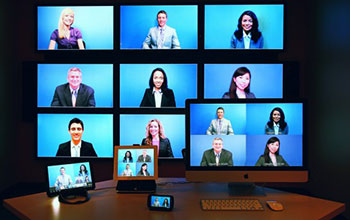
I've been covering video conferencing (now often called "telepresence") products since the late 80s and saw my first offering in the mid-60s as a child at Disneyland. Over the years, product wave after product wave has come to market with the promise of the next big thing in telecommunications only to fail to meet even reasonable expectations for deployment in a market where users are measured in billions.

Andy Grove, one of the smartest people I've ever met, referred to Intel's (Nasdaq: INTC) axed video conferencing effort as his biggest mistake while running that company. We have laptops, tablets and, most recently, smartphones capable of video conferencing, but only a tiny percentage use them for it, and even fewer do so regularly. It isn't technology, availability or cost that is the problem -- it is people, and I'd like to explore that this week.

I was briefed on what may be the best video conferencing system in the world recently -- a product called Vidyo, which got me thinking about this. So, with some irony, it will be my product of the week.

Video Conferencing to Telepresence: a Brief History

AT&T (NYSE: T) first showcased video conferencing in the middle of the last century. It was incredibly impractical because networks weren't yet digital, but you could walk into a booth at Disneyland and talk to someone in another booth and see that person on a camera. Granted, since the booths were next to each other it wasn't that stunning as a communications technology, but everyone seemed to agree it was the near-term future. It was crafted into Disney's (NYSE: DIS) home of the future and written into the "The Jetsons" (predecessor to "Futurama").

Jump ahead to the late 80s, when there was a wave of room conferencing system companies. They proliferated like rabbits during the 90s and then largely vanished into Polycom by the beginning of this century. The promise of saved travel expenses was replaced by the image of little-used rooms full of largely nonfunctioning hardware that was never used (and to my recollection rarely dusted).

Last decade, we saw the birth of HD video conferencing systems because hardware makers figured that the problem was that we couldn't see each other clearly enough. They did address some of the more troubling aspects -- like the fact it took a near graduate degree to operate some of the older systems -- but one known problem remained.

The systems largely wouldn't interoperate. This interoperability issue kept them from being used for anything but in-company meetings -- and given the good ones cost upwards of half a million dollars, this meant that small remote offices and home workers (Jerry Seinfeld had one) generally couldn't afford them.

The systems were used more, but video conferencing didn't even look like it was getting close to critical mass. This year HP (NYSE: HPQ) -- which had one of the best systems -- exited the market. It sold its solution to Polycom, which has kind of become the great video conferencing system graveyard.

The big problem that no one seems to want to address is that we generally don't like conversing for long looking someone else in the eye. Try this: Sit across a table and look right at someone for an extended period of time while working with them. We had an exercise in college that put students together this way to emphasize human interaction. Generally, particularly for guys, this is not only uncomfortable, but also leads to confrontational behavior. It is OK for a few minutes -- but for longer meetings, you have this increasing feeling of discomfort.

I think this response can be unlearned, but I also think this is why people generally need to be forced to use these systems.

Where It's Successful

The real test is whether people just use these systems naturally when given the choice, and most don't. Even though airline travel is anything but fun these days, it is generally preferable to using a video conferencing room based on employee behavior. How companies get folks to use the system is to restrict air travel and force the rooms as the only option for in-face meetings that otherwise would involve travel.
The clue that most seem to have missed is that people generally have to be forced to use the systems, and that wasn't the case with phones or audio conference room systems. It isn't that people don't want to talk to each other -- it is that they don't like to stare at each other for long periods of time.

Other Problems

Over the years, other problems have become evident as well. The folks who are remote have the greatest affinity for a video solution, but what they need is to feel they can see into a meeting without being a head on a screen where folks focus their attention.

In short, they want to feel like they are part of the meeting but not the presentation themselves. Desktop users worry that executives are using desktop video systems to watch them in secret, and women generally feel very uncomfortable that someone can see their face before they've had a chance to check their makeup.

Oh, I'm not making this up -- we did a ton of surveys over a period of about 10 years as to why this stuff wasn't being used, and these are the things that came up.

Wrapping Up: Lessons Learned

Understanding human interaction isn't easy. We tend to be complex and very different. The reason we aren't doing video conferencing calls regularly is partially because these systems don't interoperate, but it is mostly because these systems don't embrace the way we actually like to communicate.

One final thought: If you look at how this is implemented, even by Apple (Nasdaq: AAPL) on smartphones, the focus is on the camera looking at the speaker rather than the camera looking at what the speaker is seeing -- the vastly more interesting subject matter. I mean wouldn't you rather see a vista than a wobbly close up of someone's nose hairs?

The most interesting test I've seen recently was when Marvell took a 65-inch HDTV, stood it on its edge on the floor, put a camera on the upper edge, and made it a video conferencing demo. This allowed people to chat like they would in a hallway. It seemed to shorten the conversations, and it also seemed vastly more natural for both speakers and for teachers.

Something to ponder this week as we see our retirement funds melt down.

Product of the Week: Vidyo

VidyoPanoramaEvery few years, I pick what I think is the best video conferencing product in the market; this time, Vidyo wins by a mile. Part of the reason is massive scalability, starting with a PC client at the low end and graduating up to systems that can have nine screens. This last is particularly interesting, because HDTVs are relatively cheap, and while some of the systems use proprietary TVs costing upwards of US$30K, Vidyo uses off-the-shelf HDTVs.

The system engages through email. You send emails out and folks click on the links, which can be put into calendars to enable the session, making it very easy to use.


If you were wondering about the 9+ screen part, this is particularly useful for department meetings where the employees are remote, because each employee gets a screen. Typical three-screen high end systems are limited to three people. Anything more than that puts the extras on an audio-only call.

Vidyo's highest-end system, the Panorama, goes up to 20 screens and costs $40K -- which is still a fraction of what most systems in its class cost, and it doesn't require a dedicated network.

Vidyo is currently working to put the client on tablets and smartphones. Hey, I've been traveling all week, and if telepresence/video conferencing systems ever take off, my tired butt will stay at home more often. The Vidyo system is the best yet, and it's a great candidate for my product of the week.

IT Management » FCC to Scrutinize BART's Cellphone Block

Posted by echa 5:21 PM, under | No comments

FCC to Scrutinize BART's Cellphone Block | FCC The Bay Area Rapid Transit system, or BART, will reportedly come under the FCC's microscope following the block that the public transportation system put on mobile devices inside its stations. BART says it instituted the block to keep a public protest from growing out of hand. That decision spawned further protests and may have violated the law.


The U.S. Federal Communications Communication (FCC) reportedly intends to investigate the Bay Area Rapid Transit system (BART) over the San Francisco-area public transportation system's recent shutdown of cellphone service at four stations in the face of a public protest.

BART cut cell phone services for several hours on Aug. 11 when a public demonstration began moving from station to station. The demonstrators were protesting the shooting of homeless man Charles Hill by BART police last month.

The move cut off cellphone service, including emergency calls, and outraged civil libertarians, who pointed out that it endangered public safety and stifled free speech.

It also sparked more protests, as well as an attack by hacker community Anonymous, which targeted a BART website.

It's possible that the cellular service shutdown contravened provisions of the Communications Act of 1934, which expressly prohibits local and state law enforcement agencies from jamming transmissions to thwart criminal and terrorist acts.

FCC spokesperson Neil Grace didn't respond to requests for comment by press time.

All Your Speech Are Belong to Us

BART gave different explanations as to how it shut down cellular communications.

At first, it said it had approached wireless carriers directly and asked them to turn off service, but later, BART said its staff or contractors shut down power to the nodes and alerted the cell carriers.

BART says it owns and controls the underground cellphone network, which runs from Balboa Park Station through the Transbay Tube. It indicated that it shut down the service to essentially prevent a repeat of what had happened recently in England, where mobs used mobile communications to coordinate their riots.

Further, BART claimed that the shutdown only affected its stations and that cellphone service was not disrupted outside its stations. It also stated that intercoms and courtesy phones in areas where cellular service had been shut off continued to work.

BART spokesman Linton Johnson reportedly said that riders do not have the right to free speech inside the fare gates, and he indicated that cellular service might be cut again.

"BART should focus on keeping the trains running and the passengers safe," Rebecca Jeschke, a spokesperson for the Electronic Frontier Foundation, told TechNewsWorld. "It did not need to cut out phone service in order to do this."

While the cellular service shutdown might have stopped a protest, it cut off "a lot of other communication as well," Jeschke pointed out.

BART did not respond to requests for comment by press time.

Fallout From the Shutdown

BART's cellular service shutdown prompted hacker community Anonymous to threaten retaliatory action.

Earlier this week, it made good on the threat, hacking into BART's servers. However, what it did next drew a degree of backlash -- it published the personal information of about 2,000 BART users in the database.

Did Anonymous shoot itself in foot with that move?

"This is collateral damage," Todd Feinman, CEO of Identity Finder, which discovered details about the personal information shortly after the Anonymous hack, told TechNewsWorld.

"Anonymous doesn't care who they hurt, they just want to get press," Feinman said. "They would've shot themselves in the foot if they hadn't got any press."

Anonymous also called for a peaceful protest against BART on Monday.

That protest was well attended and apparently went off without any reports of serious trouble, possibly because of the heavy police presence at the site. Video of this protest has been posted here.

The Cause of the Unrest

The protests and the hacking of BART's website were sparked by the July shooting of homeless man Charles Hill at the BART Civic Center station. Hill was reportedly shot while wielding a knife, though witnesses claimed he could have been subdued by less lethal means.

The ensuing protests have caused the issue to grow into one involving free speech.

"The real question is, do we want government agencies to be able to shut down wide swaths of phone service on claims of a rumor that there might be a protest?" the EFF's Jeschke asked.

"I think it's pretty clear the answer to that is no," Jeschke said.

Related Posts Plugin for WordPress, Blogger...