Showing posts with label Mobile. Show all posts

Tuesday, September 13, 2011

Mobile Tech » AT&T Plans Mango Feast

Posted by echa 2:35 AM, under | No comments

Mobile Tech » AT&T Plans Mango Feast Microsoft's Windows Phone operating system barely has a toehold in the smartphone market, but AT&T is moving to change that with the announcement of three new handsets running the latest WinPho version, dubbed "Mango," as well as upgrades to Mango for existing WinPho devices. That might just keep Windows Phone on the radar until Nokia unleashes its expected slew of new products.

AT&T (NYSE: T) announced on Monday that it would add three new 4G smartphones running Windows Phone 7.5, aka "Mango," in the fourth quarter.

It also pledged to update existing WinPho7 devices to Mango this fall.

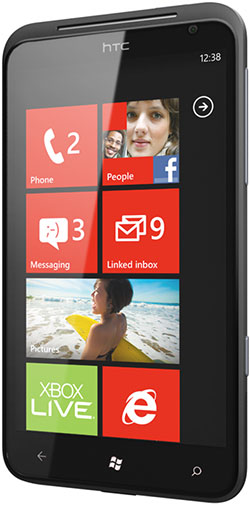
The three new devices are the HTC Titan, with a 4.7-inch screen; the Samsung Focus S, with a 4.3-inch display; and the Samsung Focus Flash, with a 3.7-inch screen.

Mobile Tech » AT&T Plans Mango Feast
HTC Titan
The announcement could be seen as AT&T's attempt to keep its Windows Phone operating system afloat until it gets a hoped-for boost next year, when Nokia's (NYSE: NOK) expected marketing push is expected to kick in.

"How I see this playing out is you want to keep Windows Phone 7 viable in the market," Ramon Llamas, a senior research analyst at IDC, told TechNewsWorld.

"Windows Phone 7 has got more apps than it used to," Michael Morgan, a senior research analyst at ABI Research, told TechNewsWorld. "It's now got the upgrade to Mango. People do enjoy using the user interface and, so long as the devices come out and execute properly, it should be able to remain on life support until we see what happens when Nokia finally puts all its cards behind the Windows Phone 7 devices and launches that huge marketing push it promised."

Alternatively, the focus on 4G could actually help Microsoft (Nasdaq: MSFT) stay ahead of the market until Nokia's support kicks in.

"It's important for Windows Phone 7 to be on the leading edge in order to capture market share," Rob Enderle, principal analyst at the Enderle Group, pointed out.

"4G is the next-generation network, and the vast majority of the smartphones in the market are 3G, so it looks like Microsoft will be ahead of the market," he told TechNewsWorld.

What's on the Way

The Samsung Focus S, one of the three new 4G phones AT&T has announced, leverages the success of its predecessor, the Samsung Focus, which AT&T claims is the highest-selling Windows Phone 7 smartphone in the United States.

This device has a 4.3-inch Super Amoled Plus display, a 1.4 GHz processor, and the standard front- and rear-facing cameras.

The other 4G smartphone that AT&T announced in its coming lineup is the Samsung Focus Flash.

This appears to be a device for the budget-minded, based on AT&T's description.

It will have a 3.7-inch Super Amoled screen; a 1.4 GHz processor; and the standard front- and rear-facing cameras.

The HTC Titan has a 4.7-inch display -- more than 30 percent larger than the 3.5-inch screen of the iPhone 4.

HTC began conducting focus group evaluations in London, Paris, Madrid and Berlin for the Titan and another Mango smartphone, the Radar, earlier this month.

The Titan has the standard front and rear cameras. It also has a dedicated hardware camera button. This lets users take photographs without unlocking the phones.

It comes with the HTC Watch video service, which provides access to the latest premium movies and TV shows.

The Titan also offers access to Microsoft's Zune music service, and lets owners access Microsoft Xbox Live in addition to the usual social networking services.

Planning Ahead to Be Fruitful

Unveiling the three new Mango smartphones and updating existing WinPho7 devices to run Mango will "keep the installed base happy and prove that Windows Phone 7 has a pulse," IDC's Llamas said.

This appears to be part of a long-term strategy to indicate that Windows Phone "is not just the operating system but also an ecosystem of players," Llamas added.

Both Microsoft and AT&T need to fly the flag. Sales of Windows Phone devices haven't exactly taken off so far.

"We're looking at one to 1.5 million devices sold per quarter since launch last year, which isn't taking over the market as Microsoft promised," ABI's Morgan pointed out.

AT&T did not respond to TechNewsWorld's request for comment by press time.

Sunday, September 11, 2011

Mobile » German Court Deals Another Flesh Wound to Samsung's Galaxy Tab

Posted by echa 12:34 AM, under | No comments

IT Management » German Court Deals Another Flesh Wound to Samsung's Galaxy Tab Samsung still has plenty of legal avenues to pursue in Europe to widen its distribution channels for the Galaxy Tab, in spite of a German court's intransigence over the design issue. In this case, Samsung would be best off attempting "to invalidate the Apple patent by finding industrial designs that pre-date Apple's patent and disclose similar "minimalist" design elements," suggested attorney Will Trueba.

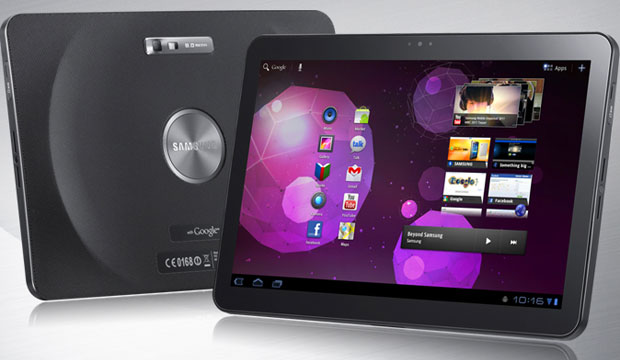
First it gave Apple (Nasdaq: AAPL) the preliminary injunction it was seeking against Samsung's Galaxy Tab. Then it suggested it might have been at least partly mistaken. Now the Dusseldorf court that has been hearing Apple's patent suit against Samsung's Galaxy 10.1 tablet, has confirmed that yes, Samsung's German subsidiary may not sell the device in Europe.

The crux of this complicated back-and-forth is Apple's contention that tablet makers Samsung and Motorola have infringed on various elements of the iPad's intellectual property, including how it is designed.

IT Management » German Court Deals Another Flesh Wound to Samsung's Galaxy Tab
The Samsung Galaxy Tab 10.1

The German court placed the preliminary injunction on Samsung last month, just as the company was getting set to market it in Europe. Days later, it hesitated over the question of whether a German court could ban a company headquartered in South Korea from selling throughout Europe.

Besides this preliminary injunction, Samsung also must contend with another issued by a court in The Hague, Netherlands, banning the company's Dutch subsidiary from selling the Galaxy or the Ace smartphone in Europe.

The parent company, Samsung Electronics, however, is not subject to either of these injunctions and is free to sell the device on the continent. Still, the injunctions are problematic, as they complicate Samsung's logistics strategy -- both the Netherlands and Germany are chief distribution points for most pan-European operations.

Such considerations, though, are just a sideshow to the main question: What will be the ultimate fate of the Galaxy in Europe?

The Many Venues to Keep Fighting

Samsung is not giving up. It plans to immediately appeal the ruling as well as aggressively pursue Apple for its ongoing violation of Samsung's wireless technology patents around the world, it says in a statement provided to the E-Commerce Times by spokesperson Kim Titus.

Samsung does have options at its disposal, albeit complicated ones, according to the Foss Patents blog.

It can appeal the preliminary injunction to a higher regional court, possibly getting it lifted in a few months.

Also, this injunction does not impact the main proceeding before the regional court, which is expected to take a year and can be appealed.

If, after the appeals process is exhausted, the regional court has decided the preliminary injunction was the appropriate measure, it stays in place and becomes a permanent injunction, FOSS continues.

If it decides it was an error, Samsung may sue Apple for damages.

Apple did not immediately return a call from the E-Commerce Times.

Community Design and Other Issues

One of the legal arguments Samsung is pursuing challenges Apple's claims that it has patented what many consider to be generic characteristics, such as the tablet's size.

"We also believe that by imposing an injunction based on this very generic design right, this ruling restricts design innovation and progress in the industry," Samsung says in its statement.

Apple owns a Community design right that covers the appearance of product design as a whole or in part, noted Will Trueba, a founding partner with the law firm of Espinosa Trueba.

IT Management » German Court Deals Another Flesh Wound to Samsung's Galaxy Tab
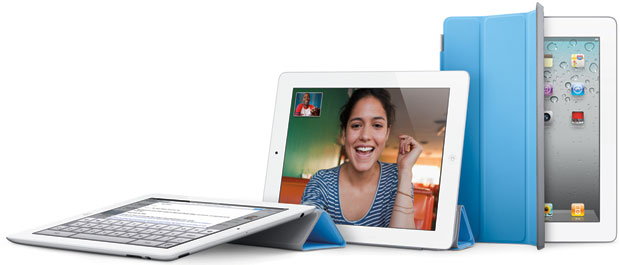
The iPad 2

In this case, Samsung would be best off attempting "to invalidate the Apple patent by finding industrial designs that pre-date Apple's patent and disclose similar "minimalist" design elements," he told the E-Commerce Times.

The good news, for Samsung, is that since patent rights are based on each particular country's laws, the ruling by the German court should have very little bearing on the decisions by courts in other countries.

However, the design issue is just one small piece of the two companies' legal fight, continued Trueba.

"Some of the suits filed in other countries relate to other intellectual property rights, including utility patents and copyrights," he said.

Abusive Patent Laws

In the bigger picture, this is just one episode illustrative of how easy it is to abuse patent laws on both sides of the Atlantic, Ryan Radia, an analyst with the Competitive Enterprise Institute, told the E-Commerce Times.

"Both regimes suffer from serious problems. For example, the recent acquisition of Motorola Mobility (NYSE: MMI) by Google (Nasdaq: GOOG) was largely a defensive move intended to better position Google to defend itself against patent litigation," he pointed out.

Patent laws exist to protect the creation of new ideas and inventions, Radia said, but at the end of the day, "there is nothing inherently novel about the shape or look or size of the iPad. I suspect Samsung will ultimately be vindicated, but in the meantime it is locked out of important markets in Europe."

Wednesday, September 7, 2011

Mobile Tech » Speedtest Won't Fix Your Poky Connection, but It Sure Is Nice to Know

Posted by echa 12:33 AM, under | No comments

Mobile Tech » Speedtest Won't Fix Your Poky Connection, but It Sure Is Nice to Know When the data connection on your iPhone hits the skids, it's not always apparent why. It would be great to have an app that would automatically fix that. SpeedTest.net's app won't do that, but it will give you exact figures regarding how slow or fast your connection is at any given time. That info can be used to find the best spots for wireless connections and possibly deal with your ISP.

Speedtest.net Mobile Speed Test, an app from Ookla, is available for free at the App Store.

For the most part, I barely notice the incoming speed of my Internet data connections on my iPhone 4 or iPad 2. Sure, if I want to download something large, I make sure I'm on a WiFi connection. If I'm in a car (riding as a passenger), I'll think twice about attempting to download a bunch of email out of range of an AT&T (NYSE: T) 3G tower.

But sometimes -- usually when I'm streaming a video or really need to get some work done -- it's painfully obvious that the tiny invisible blips of data are not riding the waves very fast at all, for no discernible reason. In fact, I've had poor Netflix (Nasdaq: NFLX) streaming response while using a WiFi connection only to turn off WiFi on my iPhone 4 and stream via AT&T's cellular data service instead -- with much better results.

This used to be sort of trial and error, hit and miss. But now there's an app to help you better understand what sort of Internet data movement performance you can expect: Speedtest.net Mobile Speed Test by Ookla.

This free app works much like the widely and wildly popular desktop browser-based version at Speedtest.net. You start the test, which sends some sort of meaningless download data to your desktop (or in this case, iPhone) while the app measures the speed at which you're able to gobble the data. Then it reverses and uploads a smaller bit of data.

As with most home Internet connections, at least in the U.S., the download speeds are far faster than the upload speeds. I'm not sure where the bottleneck or tech limitations are with this; I just recognize it as a fact of the data plans, most notably seen when a regular consumer is surprised at how long it takes to upload a simple video.

Back to Speedtest.net Mobile Speed Test

Mobile Tech » Speedtest Won't Fix Your Poky Connection, but It Sure Is Nice to Know
The Speedtest.net Mobile Speed Test app uses Ookla's massive global infrastructure to minimize the impact of Internet congestion and latency when it tests your bandwith. I'm not sure what this means, exactly, but I get the impression that Speedtest.net has some brains that decide which servers to connect you to in order to try to get a reasonably accurate measure of your true download/upload speeds.

For example, it wouldn't make a lot of sense to connect you to a small overloaded server in Antarctica that's trying to communicate through a tiny pipe, nor does it make sense to connect you to servers with all sorts of switches and hops in between you and the server. Technically, a blip of data ought to be moving so quickly that thousands of miles mean nothing. But really, what all this means is that you'll likely see the Speedtest.net Mobile Speed Test app connect you to a regional server for your test. The default server chosen in my tests has been from a city about 80 miles away.

In my home, I tend to get my best bandwidth during the morning hours, but as the afternoon wears on, it seems as if my bandwidth falls off a cliff. I'm guessing that every kid in my neighborhood, in the city, in the county, and in the state, et al, either gets home from school and starts playing video games on Xbox Live or starts streaming some kid flick from Netflix. Or maybe it's not the kids, but if I'm thinking about downloading a video to buy on iTunes ... let's just say that I don't usually bother attempting it from 4 p.m. to 8 p.m.

In fact, I've had a roomful of family over during the holidays, and when we all finally agreed on which HD movie to rent on my Apple (Nasdaq: AAPL) TV, we realized that, oops, this puppy will be ready to watch in two hours.

For some people with wicked-fast Internet service plans, this is never an issue. For those of us unwilling to shell out big bucks for high-speed -- or who are located in areas not served with high-speed options -- the Speedtest.net mobile app will give you a quick way to judge your likely bandwidth, even if you're sitting over at your friend's house watching football or thinking about downloading a movie to watch while sitting in an airport waiting for your flight.

The Results

During one test in the wee hours of the morning, my download speed via my home-based DSL service (rated at 3.0 Mbps) delivered 2.21 Mbps to my iPhone 4. Not bad. I turned off WiFi and tried AT&T directly and got a paltry 0.43 Mbps download. Wow. I was shocked at the difference. Obviously, I expect WiFi to usually be faster, particularly when I'm browsing the Apple App Store. But this was a massive difference.

What about uploads? The WiFi delivered 0.55 Mbps in upload speed while AT&T let me push 0.24 Mbps.

What about bars and signal strength? When just using AT&T, I realized that I was in an area of my house that only gave me two bars of signal strength to my iPhone 4. With more bars, might I get a faster response? I moved to a couch where I get four bars and ran the test again, just a few minutes after the first test. The result? Worse. I got 0.27 Mbps on the download and 0.04 Mbps on the upload. I don't doubt that signal strength can influence your upload and download speeds, but I'm guessing that factors beyond your control, like perhaps how the people around you consume data, will have a larger effect your personal bandwidth.

Bottom Line

All in all, the Speedtest.net Mobile Speed Test app won't actually fix any bandwidth problems, but it will alert you to possible issues with your data connections no matter where you go. For this reason, I count it among the pack of utility apps you'll want to have on hand, just in case. As a practical solution, if you need some evidence to use in an argument with an Internet service provider in an effort to get a faster connection or a refund, this data won't technically help you. But from a practical standpoint, companies sometimes respond to customers who seem to have at least some data that backs up their righteous anger.

Or, you might want to have it on hand to help you pick a local coffee shop that's better able to suit your Internet-guzzling needs.

Sunday, September 4, 2011

Mobile Tech » Defending the Mobile Universe From a Fraudster Onslaught

Posted by echa 9:14 PM, under | No comments

Mobile Tech » Defending the Mobile Universe From a Fraudster Onslaught As smartphones and other mobile devices move to center stage, consumers and retailers are being threatened by a fresh crop of fraudsters bent of wreaking havoc in the mobile universe. Although walking a tightrope between consumer convenience and fraud prevention is tricky, there are several ways consumers and retailers can protect themselves, while at the same time maintaining real-time response and analysis in mobile commerce.

The mobile age has arrived.

In 2011, global shipments of smartphones and tablet devices surpassed shipments of laptops and desktop PCs, laying the groundwork for an era in which consumers are increasingly using mobile technology for everything from airline reservations to vehicle purchases.

The mobile age snuck up on many of us. But one group of mobile-savvy users has been hard at work, waiting for mobile to rise in the hierarchy of commerce: fraudsters.

The frightening reality is that most retailers and consumers aren't prepared for the tidal wave of fraud that is already being unleashed in the mobile arena. To inoculate themselves, retailers and consumers need to understand which mobile behaviors put them most at risk.

More importantly, they need to know how to navigate those behaviors to create an effective mobile fraud prevention strategy.

Pre-Mobile Fraud Prevention

In the "old days," fraud prevention took on many different forms. One of the simplest forms of fraud prevention in e-commerce was to verify the customer's credit card number, CVV code, billing location and shipping address.

From there, online fraud prevention progressed to include device identification via IP addresses and tagging devices like Flash and cookies. Although these tactics were initially effective, fraudsters adapted their strategies to incorporate the use of proxy servers to hide their true IP address, among other techniques.

Today's most sophisticated fraud-prevention providers employ cookieless device identification, real-time proxy piercing for true IP address detection, intelligent packet inspection for subversion detection and other strategies to stay one step ahead of cybercriminals.

Yet the transition to mobile is creating new challenges in fraud prevention, many of which demand a more proactive approach on the part of retailers and consumers alike.

Mobile Behaviors and Vulnerabilities

Malware is a major threat for mobile consumers and retailers. More than 73,000 new malware threats are released every day, driven by consumers' willingness to download unproven apps that haven't been properly vetted by platform providers. While open platforms like Android have been proven to be more susceptible to attacks, Apple's (Nasdaq: AAPL) iOS is by no means vulnerability-free.

Most mobile users don't install antivirus or antispyware software on their devices. That makes mobile technology an easy target for criminals eager to obtain personal data and online account credentials, accomplished by introducing malicious code through apps, social media sites and other entry points.

Mobile fraud detection is complicated in that it is difficult for online retailers to pin down the source of fraudulent transactions. While IP addresses for PCs are roughly fixed to a single location, mobile users routinely connect through WiFi networks and 3G gateways scattered across a broad area. This makes it problematic for retailers to effectively monitor threats using IP addresses.

Another worrisome feature is that mobile devices have limited digital fingerprints. Today's consumers remove cookies and gravitate toward mobile devices that eliminate the use of Flash technology (e.g. iPhones) -- crippling the ability of many online retailers and financial institutions to differentiate between returning customers and fraudsters.

One of the most challenging aspects of mobile fraud prevention may lie in the expectations of consumers themselves. More than ever, consumers expect mobile technology to deliver immediate gratification. To meet the needs of their customers, retailers provide opportunities for the instant authorization of goods.

Consequently, transaction speed eliminates the possibility of manual reviews, allowing mobile crooks to exploit automated purchasing capabilities and quickly offload stolen merchandise around the world.

Mobile Fraud Prevention Strategies

2011 was the first year that mobile transactions became a material percentage of revenue for companies. The potential for serious mobile fraud is challenging retailers to identify solutions that improve security without significantly impacting the mobile customer experience.

Although walking a tightrope between consumer convenience and fraud prevention is tricky, there are several ways consumers and retailers can protect themselves, while at the same time maintaining real-time response and analysis in mobile commerce.

1. Current transaction mix review

For retailers, mobile fraud prevention begins with a thorough review of the current makeup of fraud transactions and prevention tactics to determine the impact of mobile on existing device identity and behavior-based fraud filters. In many instances, retailers may discover that their current approach allows free access for mobile fraudsters while limiting access to legitimate customers. For example, a common attack vector is to change browser settings to make a PC looks like a mobile device in order to target lax mobile-specific rules.

2. Reliance on mobile Web for application authentication and authorizations

A mobile application can provide a superior user experience in terms of responsiveness and interactivity. When it comes to moving money or authenticating a high-risk transaction, however, companies should fall back to using tested and proven Web technologies. Using HTML5, companies can have a multifunctioning Web and mobile site that is trivial to integrate into a mobile app. Trying to re-invent the wheel and putting too much trust in the mobile device is a recipe for trouble.

3. Centralization of fraud intelligence

While many companies have different teams and technologies supporting their mobile versus Web strategy, it is important that fraud intelligence is consolidated across the same risk engine. In addition to improving fraud detection rates, centralization allows retailers to better manage the cost of fraud prevention.

4. Behavior and location profiling

With mobile location quickly becoming a reliable user signature, security-based apps can leverage mobile GPS technology to create profiles based on daily patterns. The catch is that consumers must sacrifice a certain amount of privacy -- plus valid use of location data is context-specific. For example, you may be willing to let your bank use your GPS location on a one-off basis, perhaps to verify a fund transfer from your account. You would not, on the other hand, find it acceptable for them to continually track all of your movements.

5. Layered fraud prevention

No security measure is foolproof. Eventually, cybercriminals will find a way to breach any authentication method, no matter how sophisticated. Layered fraud prevention offers greater security because it presents multiple security barriers, increasing the level of difficulty for fraudsters. For example, many iPhone app developers rely on the iPhone UDID, a unique hardware identifier, to recognize returning customers. However, jailbroken iPhone apps are able to easily spoof this.

For consumers, mobile fraud prevention boils down to a handful of common sense behaviors and practices. Since many app stores lack advanced malware detection systems, consumers should be cautious about downloading apps from unknown providers. Likewise, links contained within text messages should be treated with a healthy dose of skepticism.

Most importantly, consumers should direct their mobile purchases toward trusted retailers. Going forward, the mobile marketplace will reward retailers that take meaningful measures to improve mobile security and equip their customers with convenient fraud-prevention tools.

Mobile Tech » The Wedding Crashers

Posted by echa 9:08 PM, under | No comments

Mobile Tech » The Wedding Crashers The U.S. Department of Justice has made its move to prevent AT&T from merging with T-Mobile, filing an antitrust suit to stop the purchase. It's the biggest roadblock yet in what was never expected to be an easy deal, and now it's unclear whether the companies have any hope of winning the fight. Meanwhile, HP has one last go with TouchPad, iTunes changes the channel, and WikiLeaks dribbles more than it meant to.

Nobody expected AT&T (NYSE: T) to have an especially easy time convincing regulators to allow it to buy up rival wireless carrier T-Mobile. AT&T announced its intentions last Spring to purchase the fourth-largest U.S. carrier from parent company Deutsche Telekom (NYSE: DT) for US$39 billion, and critics from all corners wasted no time expressing why they thought that would be a very bad idea.

But that's not to say everyone thought it would be impossible. If the prevailing winds of antitrust regulation weren't strong enough to knock Comcast's (Nasdaq: CMCSK) bid for Universal off course, then who's to say AT&T's deal wouldn't eventually fly too?

Now, though, it looks like the proposal has encountered its biggest blow yet, and it may end up crushing the merger completely. The U.S. Department of Justice has filed a civil antitrust suit to block the buyout, claiming such a deal would significantly hurt competition in the U.S. wireless market. If allowed to go through, the purchase would end up hurting consumers through higher prices, diminished service quality, fewer choices and slowed innovation, according to the DoJ.

Just as the suit was announced, the U.S. Federal Communications Commission chimed in with a message of support for the Justice Department's action.

Over the last few months, AT&T has taken every opportunity it could get to convince regulators, watchdogs, consumers, you, me and every other living thing on the planet that the merger was a great idea. Just as the suit was announced, AT&T was busy publicizing a new reason everyone should get behind the deal: jobs. Letting the company buy up T-Mobile would enable it to bring 5,000 outsourced jobs back to the U.S., the company claimed. It's still not clear how many existing U.S. jobs the merger would have eliminated, though.

Listen to the podcast (14:27 minutes).

The news of the DoJ's lawsuit comes as a stroke of vindication for groups opposed to the buyout, of which there are many. Sprint (NYSE: S) would probably have been the carrier with the most to lose from such a deal, and it's been loudly critical almost since Day 1. Consumer groups have also expressed concern. Verizon hasn't exactly been at the forefront of the opposition, even though a combined AT&T/T-Mobile would have knocked it off its perch as the biggest carrier in the U.S. by several million customers.

Meanwhile, it's probably the worst-case scenario for AT&T, which seemed more or less suckerpunched by the DoJ's lawsuit. Wayne Watts, a top AT&T lawyer, said that his company sensed no indication that the department was even considering doing something like that despite multiple meetings with DoJ representatives. He said AT&T plans to fight the suit in court.

Investors were smacked hard too. The morning the news came out, AT&T shares dipped as much as 5.5 percent. And losing the deal could cost AT&T a lot more than a bit of dignity and a few months worth of lawyer fees. Back when it was negotiating the deal, the carrier reportedly agreed to pay Deutsche Telekom $3 billion for its trouble if the purchase were somehow scuttled. With that kind of money on the line, AT&T will no doubt fight tooth and nail in court, but it also might mean it ends up agreeing to some unusually large concessions if the DoJ offers to cut it a deal.

A compromise may not be what the DoJ has in mind, though. Given the unexpected arrival of this lawsuit, it looks like the department wants this deal dead, plain and simple.

If it turns out AT&T simply cannot get what it wants, though, it's not all doom and gloom. The carrier insisted in the past that buying T-Mobile was the only reasonable way it could expand its 4G services to cover most of the U.S., but that's open to debate. A leaked memo from a few weeks ago almost made it look like the real reason it wanted to buy T-Mobile was to keep it out of Sprint's hands.

As for Deutsche Telekom, if the deal dies, it'll likely never find another buyer willing to take T-Mobile off its hands for anywhere near $39 billion. It might go crawling back to Sprint, though even a merger between those two smaller networks might still agitate antitrust regulators. Without some kind of outward assistance, though, it's unlikely T-Mobile will be able to be a competitor in the 4G arena. It could perhaps start buying even smaller carriers to expand its reach, but that definitely does not play into Deutsche's plans to exit the U.S. market ASAP.

Leak, Spill and Dribble

WikiLeaks is no stranger to informational security disasters, but usually it's the one doing the tattling. This time, though, the leaker has become the leakee. Sort of.

The information relates to CableGate, that mountain of diplomatic cables WikiLeaks distributed last year. What's different this time is that those same cables can now be viewed in unredacted form -- the names and identities of confidential sources are left visible. As leak-happy as WikiLeaks is, it never intended to let the world see the uncensored versions of those files.

In a way, this unredacted version of CableGate has been freely floating around the Internet for some time, but all locked up with encryption. You could get the files easily enough, but in order to unscramble and make any sense of them, you'd need to have the encryption key -- in other words, a long, complex password.

That key is what's been exposed, and according to WikiLeaks, it was all the fault of a nosy little newspaper. Several months ago, a writer associated with the UK's The Guardian was putting together a book on WikiLeaks, and in the process he was given a password from WikiLeaks officials to decrypt those unredacted files. That password was printed verbatim in the book, and now it seems anyone who can grab that original encrypted data from a file-sharing network can apply the key, get access, and find out exactly who blabbed what.

But The Guardian has its own version of events. It claims that the reporter used that key to access the encrypted files over a secure server, access to which was tightly limited. He was made to believe that the data would be removed from the server in a matter of hours, at which point the encryption key would be worthless. He thought WikiLeaks would just shut down access and change the code after he was finished having a look, so no big deal if it was published in the book.

What that reporter didn't know, according to The Guardian, was that the same file, protected with the same key, was floating around all over the Internet, being traded around by various WikiLeaks aficionados who just wanted to keep the data alive, even if it was inaccessible to them. So when that key was published, it still applied to a very much alive and very dangerous file, one that could get some people in deep, dark trouble.

Oddly enough, the tension on this has been brewing for weeks. Only now has WikiLeaks publicly commented on it because it believed the story was gaining so much traction that there was no longer any point in ignoring it. Now it's getting ready to sue The Guardian as well as an individual in Germany.

Aside from the harm this may cause for people identified in the data dump, it's also put WikiLeaks' credibility at risk. The site depends on its reputation for being a place where whistleblowers can go to anonymously leak information that they think should be out there. Whether they're right or wrong, they could have serious reservations about contacting the site if a simple misunderstanding like this is all it might take to out them.

This Is Your Company on Drugs

Google (Nasdaq: GOOG) may not be much of a drug dealer itself, but it certainly will take ad dollars from drug dealers. Mostly that means legal online pharmacies. Look hard enough and you may even find a few ads from oddball vendors dealing in strange potions and herbs that are strong enough to get you plenty blasted but aren't quite on the other side of legal -- not yet, anyway.

But for a while there, Google was carrying on some ad activities that the U.S. Department of Justice said were very much against the law. According to the DoJ, Google's AdWords program was running ads from Canadian pharmacies that targeted U.S. buyers, which is a serious foul. The investigation lasted for years, but Google settled the problem in August by paying an enormous amount -- half a billion dollars, which was the estimated revenue from all that shady advertising.

That settlement wasn't the end of the headaches for Google, though. It's paid off the DoJ, but now a shareholder wants a pound of flesh too. The Google stock owner reportedly claims the company breached its fiduciary duty by facilitating illegal drug imports and filed false annual reports over a period of six years by not disclosing the revenues earned in doing so.

If the suit takes root, it could soon be joined by lots of other shareholders as a class action.

But at first glance, the case doesn't appear to be an easy win. For one thing, Google's fine. That revelation of the whole problem and the amount of the settlement were barely a blip on the radar as far as the company's stock value was concerned. Shareholders who complain they lost money because of any sort of malfeasance on Google's part might have a hard time connecting any substantial losses to this one particular affair.

Also, the argument that Google falsified records looks like it could be pretty flimsy. I guess it's possible there's some smoking gun that hasn't been revealed yet, but fudging a public company's official balance sheet is a serious infraction. Maybe some companies do it once in a while, even ones as prominent as Google. But would the CFO of the Internet's most powerful company really put it all on the line just to hide a few piddly little drugstore ads, the profits on which hardly amount to a drop in Google's massive ocean of money? Hard to believe it happened -- it just sounds too stupid.

Changing the Channel

Apple's (Nasdaq: AAPL) iTunes service made a small change to its lineup recently that could play into much wider plans for entertainment.

It eliminated 99-cent TV show rentals. This was where you could pay a buck, download a TV show, watch it, and then forget about it, because it would delete itself automatically from your hard drive in a few days. For anyone who isn't into watching reruns on purpose, it was a pretty good deal. It came out right around the time the revamped Apple TV arrived on the scene, and TV show rentals were one of the device's big selling points.

But no more of that. Movies can still be rented, but TV shows must be purchased for $2 to $3 per. They stay on your hard drive until you delete them. A dollar or two difference may not be that big a deal, depending on your entertainment budget, but this was a simple, customer-friendly offering that Apple promoted pretty hard in its short existence. So why yank it after only about a year?

Apple said it was all about customer demand. According to them, TV show rentals never really caught on. And who knows, maybe the TV networks applied a little pressure themselves. Apple's entertainment delivery model is going through some big changes soon, and it's not so much of a stretch to think maybe Apple had to do a little give and take to get what it wanted.

The change that's coming is iCloud, the Apple syncing service that'll let you share data across Apple devices in new ways. And users of Apple TV have noticed recently they can start actually streaming TV shows they've purchased in the past -- even ones they bought so long ago they can't remember buying them. It used to be you could just stream rentals and stuff saved somewhere on the local network.

So it looks like iTunes TV is coming to a point at which everything you ever buy will be accessible anywhere through your iDevices -- it's just that when it comes to TV, you'll have to buy it, not rent it. You'll be paying more, perhaps, but at least you'll have a nice, big library of reruns.

One More Time

HP's (NYSE: HPQ) TouchPad tablet burned out quickly, but that's not because it burned all that brightly. It was a lousy seller from Day 1. Mega-retailer Best Buy (NYSE: BBY) reportedly complained about mountains of unsold units. And it's entirely possible that the TouchPad would have withered away over many slow and painful months had it been allowed to live.

We'll never know for sure, though, because HP put it to sleep just six weeks out of the gate.

But then HP pulled another odd move: It says it's going to go in for one more round of TouchPad production. It's still a dead tablet -- HP really is killing its webOS device lineup. But the company's going to press out another batch of them, even after that discontinuation has been publicly announced -- a sort of anti-victory lap, I guess.

HP says this last hurrah is due to the incredible spike in popularity the TouchPad experienced after its death warrant was publicized. Suddenly TouchPads were hot, and it wasn't because people wanted them as museum pieces or cheese plates. It was because prices took a nosedive to $99 -- and this was for a tablet you used to have to pay $500 to get. Sure, it's been dead-ended by its manufacturer, and webOS might fade into oblivion soon too, but that doesn't make the tablet worthless, and $100 was apparently an attractive price for a lot of buyers.

If HP was desperately trying to rid itself of a dead product, then that price drop was definitely a very effective distribution laxative. But if clearing its house of TouchPads really was what HP was trying to do, why make even more of them? HP says it's going to sell this next batch of TouchPads for an MSRP of $99, and it's a big stretch to believe that could be anywhere close to profitable.

Factors like scarcity and uncertainty may have combined with price to drive the TouchPad's postmortem popularity, and it looks like HP's trying to keep that alive for this last production run too. It says it doesn't know when they'll come in or how many there will be.

Perhaps the company has a bunch of unassembled TouchPad components lying around. That wouldn't be surprising given how suddenly and unexpected it axed the TouchPad in the first place. Maybe putting them together and selling more TouchPads for an almost embarrassingly low price is actually the least-costly option.

Thursday, August 25, 2011

Mobile Tech » Sony Looks Into the Mirror to Boost Its DSLR Cred

Posted by echa 5:26 AM, under | No comments

Sony Looks Into the Mirror to Boost Its DSLR Cred | Sony Sony's new line of SLT digital cameras pack on the megapixels. But it might be the mirrors that set the DSLRs apart from the pack. The cameras use translucent mirror technology and electronic viewfinders. "We do not expect Canon or Nikon to adopt these any time soon, as they're more conservative in this aspect of product design," said IDC's Chris Chute.
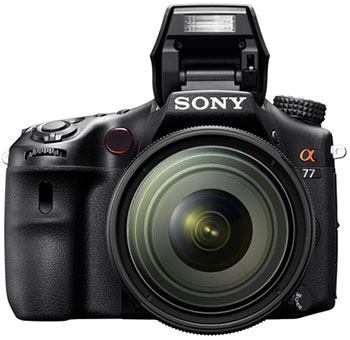
Sony (NYSE: SNE) has announced two new additions to its SLT-A family of cameras: the A77 and A65.

They offer 24.3MP effective resolution and have what Sony says is the world's first XGA OLED electronic viewfinder.

Both cameras use the translucent mirror technology common to Sony's SLT-A family and offer progressive full HD video recording.

"No other DSLR offers full HD recording in 60p, 50p, 25p, and 24p," digital photographer and film director Preston Kanak told TechNewsWorld.

Sony Looks Into the Mirror to Boost Its DSLR CredSony is unique in using translucent mirrors, remarked Chris Chute, a research manager at IDC.

"We do not expect Canon (NYSE: CAJ) or Nikon to adopt these any time soon, as they're more conservative in this aspect of product design," Chute told TechNewsWorld.

Sony did not respond to requests for comment by press time.

Tech Specs for the SLT-A Family Additions

The SLT-A77 can capture full-resolution images in bursts at 12 frames per second with full-time phase-detection autofocus. The A65's speed for this is 10 frames a second.

Both cameras use cross sensors with multipoint autofocus systems for precision tracking. The A77 has a 19-point autofocus system with 11 cross sensors, and the A65 a 15-point autofocus system with three cross-sensors.

This lets cameras maintain their focus lock on a designated moving object even if another object blocks it temporarily from view.

"It's not so much the sensors, but the logic that connects them," Rob Enderle, principal analyst at the Enderle Group, told TechNewsWorld.

"The result is supposed to be better focus on complex subjects with subject material dispersed both front and back, and side to side, and the resolution's very high, which should allow for better editing," Enderle elaborated.

The new cameras use Sony's newly developed Exmor APS HD CMOS sensor, which gives them that effective resolution of 24.3MP.

Exmor sensors combine the speed of CMOS sensors with advanced-quality image sensor technologies to provide enhanced resolution for more detailed images.

"With massive improvements in editing tools, the quantity of good data is more important than the quality of any one shot," Enderle said.

The Exmor sensors are teamed with the latest version of Sony's BIONZ image processing engine. This speeds up the conversion of raw image data from the Exmor sensors into the format stored on the camera's memory card.

Sony uses the BIONZ engine in several of its cameras, including those in the DSC family. This video explains the advantages of BIONZ.

Both cameras use what Sony says is the world's first XGA OLED Tru-Finder. This electronic viewfinder has an XGA resolution of 2,360 dots and offers a high-contrast image with 100 percent frame coverage, Sony claims.

The cameras have a Smart Teleconverter feature that lets users see compositions on the Tru-Finder so they don't have to look away from the viewfinder, and capture them as 12MP images.

"One thing that's great about the technology is the new OLED," Kanak said. "We couldn't use the viewfinder to see our compositions with previous technology."

The A77 has a three-way adjustable screen that Sony claims is another world's first.

Other technical details are available here).

Mirror, Mirror on the Wall

The latest developments in Sony's translucent mirror technology make the A77 and A65 the quickest and most responsive interchangeable lens cameras in their class, the company claims.

"This is a brilliant move by Sony to use translucent mirror technology this way, providing weight and speed advantages to its cameras," Enderle said.

Translucent mirror technology replaces optical pentaprisms used in DSLRs with electronic viewfinders, making digital cameras smaller and lighter. Introduced in the 1960s, it was used in specialized high-speed cameras such as the Canon Pelix QL but it was too expensive for mainstream use, Enderle stated.

Competitors to the A77 and A65 are the Panasonic Lumix and the Canon 60D and 7D, Kanak said.

The question now is whether consumers will bite.

"With the A77, Sony is now offering cameras that compete quite effectively against cameras such as the Canon 7D," Carl Howe, director of anywhere consumer research at the Yankee Group, told TechNewsWorld.

"Its only challenge is convincing high-end buyers to switch brands," Howe added.

Mobile Tech » iPhone Could Bring Agony and Ecstasy to Sprint

Posted by echa 5:19 AM, under | No comments

iPhone Could Bring Agony and Ecstasy to Sprint | iPhone A report this week that Sprint will soon offer the Apple iPhone on its network has excited the carrier's investors -- Sprint's stock rose about 10 percent on the news. Offering the phone would allow the carrier to better compete with its rivals' device portfolios; however, questions have arisen regarding network strain and how Sprint will handle factors like the phone's high subsidy cost.

It looks like Sprint (NYSE: S) is about to join Club iPhone.

The wireless network could become the Apple (Nasdaq: AAPL) smartphone's third U.S. wireless carrier in October, just in time for the holiday season, according to a recent Wall Street Journal report. That's also the time frame in which Apple is expected to release the fifth generation of iPhone, though the company has not officially announced a date.

Sprint's stock rose 10 percent on the news Tuesday.

AT&T (NYSE: T) offered the iPhone exclusively in the U.S. from the device's introduction in 2007 until Apple added Verizon earlier this year.

Despite Sprint's stock gain, though, the news has prompted some doubts about the value of the deal for Sprint. The iPhone reportedly comes with a subsidy price tag that is larger than other smartphones. Those subsidies could cut into Sprint's margins.

On the plus side, the addition of the iPhone would put Sprint closer to an equal footing with AT&T and Verizon, much larger competitors. Verizon has roughly 106 million subscribers. AT&T has an estimated 99 million, and Sprint has 52 million. For Apple, the move is an unambiguous plus.

Sprint declined to speak with MacNewsWorld, noting the company does not comment on speculation. Apple did not respond to a MacNewsWorld's request for comments by press time.

Good for Apple - So-So for Sprint

Question have arisen regarding whether the iPhone will put strain on Sprint's network. There has also been speculation that Sprint will have to drop its unlimited data plan to protect its network.

"I don't think it's going to kill the network," Kevin Burden, VP of mobile device research at ABI Research, told MacNewsWorld. "We're at a point now where most mobile operating networks are tuned to handle volume without bringing things down. Maybe four or five years ago it would have been a problem."

The deal will most likely happen, Burden said, and he believes it will be a strong subscriber grab for Apple. "Apple needs to get as many subscribers as it can," said Burden. "They're looking at strong competition from Androids and the upcoming BlackBerry 7. They don't have the commanding lead anymore. The phones are all getting really similar. In the U.S. market, the last big thing they can do is get Sprint."

As for the question about whether the "Apple tax" in high subsidy costs will hurt Sprint, Burden believes Sprint is accustomed to subsidies. "The subsidies won't kill Sprint. It's not like they're not used to subsidies," said Burden. "It's not a new business model."

The timing of the deal is likely scheduled for October, when Apple is widely expected to release its next iPhone version to coincide with the beginning of the holiday season.

"The introduction of iPhone 5 seems like the logical moment for Sprint to launch iPhones," said Burden. "Coming out with the iPhone 4 would be silly. It wouldn't be a big deal. So you can predict when it will have it -- they'll have it with the introduction of the iPhone 5."

The Phone for the Big League

Adding the iPhone clearly ups the ante for Sprint, giving it equal footing with AT&T and Verizon in its line of devices.

"Sprint talks about how important the device portfolio is," William A. Stofega, program director, mobile device technology and trends at IDC, told MacNewsWorld. "Sprint has had some decent devices. They've done well with HTC, which runs on Android. Even so, Sprint would like to have the iPhone. Questions about the iPhone come up on their earnings calls all the time. Having the iPhone shows they're a player. In overall numbers, they may not be in the same league as AT&T and Verizon, but they're sill a player."

On the other hand, after its second-quarter earnings report, Sprint was criticized for the high costs associated with adding and retaining customers. Adding the iPhone ratchets up those expenses. "The iPhone subsidy costs hurt margins even with Verizon," said Stofega. "The iPhone is that special case all by itself. The carrier has to subsidize at a higher rate to drive and retain customers."

A Sprint move would also come at a time when Android devices are getting the cool-factor nod from consumers.

"The world is changing. Droid is getting mindshare. It's a juggernaut," said Stofega. "It can't be slowed down by anything. The Motorola acquisition could help. There has been a need for an Android platform that shows off its full capabilities and is much more integrated between hardware and software. Motorola could make that happen."

Sunday, August 21, 2011

Mobile Tech » Bold's Audacious Price May Repel All but True BlackBerry Believers

Posted by echa 12:04 AM, under | No comments

Mobile Tech » Bold's Audacious Price May Repel All but True BlackBerry Believers At $300 -- and that's after a contract and a mail-in rebate -- T-Mobile's BlackBerry Bold 9900 is priced in the upper atmosphere relative to other phones in the U.S. market. Its cost of acquisition puts it in the company of the 32 GB iPhone 4, and it's unclear whether it can attract anyone except true CrackBerry addicts unless and until it climbs down from its sky-high price perch.

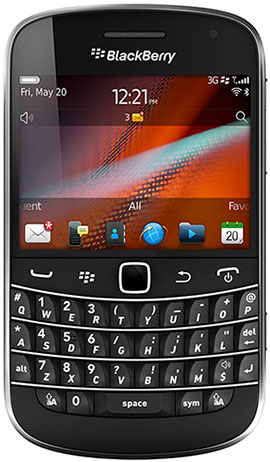
T-Mobile isn't letting all the other wireless providers have all the fun with the new BlackBerry devices rolling out this month . On Wednesday, the company announced it'll provide Research In Motion's (Nasdaq: RIMM) BlackBerry Bold 9900 for a cool US$299.99 -- after a $50 mail-in rebate and a two-year contract agreement.

Verizon and Sprint (NYSE: S) offer the BlackBerry 9930, the same phone except that it runs on 3G wireless networks. The 9900 runs on faster 4G networks, and it's the first of T-Mobile's RIM products to do so. It will go for $50 more than the 9930.

The smartphone uses the the new BlackBerry 7 operating system and is designed to appeal to users whether they prefer a physical QWERTY keypad or a touchscreen.

Must Have Fat Pockets

Early reviews indicate the 9900 is a solid smartphone choice, especially for longtime Blackberry users looking to upgrade. But what's throwing some observers off is the price. At $300 after a two-year commitment and rebate, the Bold 9900 demands a premium-level price, on level with the most expensive Apple (Nasdaq: AAPL) iPhone on the market and much pricier than other above-average smartphone offerings on platforms such as Android.

Apple's tech teams and marketing 6 Ways to Use Social Media for Business. Free Guide. mavens have positioned the iPhone as a premium handset for several years, and other phones arrive in the market every month with advanced hardware and software. RIM, however, has struggled in recent years with critical hardware reviews and diminished market share.

"This strategy does not suggest they're going to use price as a competitive weapon. I think what we're looking at here is a very wide launch with lots of operators and a focus on upgrading the people that are really committed to BlackBerrys," Matt Robison, analyst at Wunderlich Securities, told the E-Commerce Times.

That core group may not be as vocal as the iPhone consumer base, but it's significant enough to move a decent amount of handsets.

"They've got a pretty good installed base of loyal users, about 65 million globally," Mark McKechnie, telecom equipment analyst at ThinkEquity, told the E-Commerce Times.

Many of these diehard BlackBerry fans will be looking at this product, he said, "and RIM is going to try to skim that part of the market early on. It's going to be a combination of RIM and how hard the carriers push this."

T-Mobile will presumably market to those loyal users first before hoping to expand to the masses.

"I would think they may not be going after a market share or grab. They're going to maximize the value of sustaining their installed base, so a light distribution and initial high prices," said Robison.

Much of that base is overseas and in emerging markets.

For RIM to see a profit lift, though, prices will need to be high abroad as well, though that doesn't seem to be happening everywhere. Vodafone (NYSE: VOD), for example, is offering the 9900 for free.

After Loyal Fans, Crickets

Outside longtime BlackBerry users, the 9900 will need to do something to separate itself from the crowd, merit a premium price, and show it can hold up against cheaper yet reliable brands.

Dedicated users have grown accustomed to the secure e-mail and low bandwidth footprint of the BlackBerry, but that may not be enough for consumers to make a switch with so many other viable products elbowing for notice -- at much lower prices -- in the crowded mobile device space.

"They'll sell some decent volume at these levels, but I wouldn't be surprised to see those prices come down from the initial launch," said McKechnie.

Mobile Tech » Samsung Ought to Be Embarrassed and Ashamed

Posted by echa 12:02 AM, under | No comments

Mobile Tech » Samsung Ought to Be Embarrassed and Ashamed The injunction that banned Samsung from selling the Galaxy Tab 10.1 in Europe has been partially lifted, but only because the court thought it might not have the authority to issue it. Despite that, Apple's argument still stands true. It doesn't take a genius to realize that the design of the Galaxy Tab 10.1 is a blatant copy of Apple's iPad.

Samsung used to be a consumer electronics brand that I appreciated and admired. I've owned several Samsung products over the years; in fact, I use one every day. I have a Samsung SyncMaster T240HD 24-inch monitor. It's a thing of beauty, actually, with a pleasing clear polycarbonate sort of frame with a touch of deep red layered beneath the clear plastic-like housing. I love it. The display is plenty sharp for me, quite adjustable, and best yet, this unit is also an HDTV and accepts all sorts of video input cables. When I bought it a couple of years ago, I found its overall feature set -- and price -- to be far more compelling than competing monitors and HDTVs in its class.

Then there's the Samsung that produces the Galaxy Tab 10.1 tablet and Galaxy S line of smartphones.

One glance at these products and it doesn't take a genius to realize they are blatant copies of Apple's (Nasdaq: AAPL) iPhone and iPad. Back in 2010 when Samsung announced the Galaxy S smartphone, I noticed the similarities but didn't really care at the time. I have a buddy who works at a cellular service company that didn't sell the iPhone, and he was all excited about getting in the Samsung Galaxy S. "It looks just like the iPhone 3GS," he said, noting the skepticism on my face. "No, really, it looks and feels so much like an iPhone it's crazy."

A week or so later, he showed me one in the store. He was right. Samsung later introduced the Samsung Galaxy S II. The design has evolved, and while it doesn't look exactly like an iPhone 4, it shares far more than a passing resemblance.

Is Samsung Really That Pathetic?

Enter the Samsung Galaxy Tab 10.1. On the company's home page, one of the featured items is this new Android tablet. The page is no doubt dynamic, so it may change before you check it out. When I looked at it, it proudly showed off a floating Galaxy Tab 10.1 with the words "Hello Gorgeous" above it. Gorgeous indeed. To my eye, it looks just like a gorgeous iPad. Sure, the default orientation of the Galaxy tablet is horizontal vs. the iPad's portrait use, but the full-frontal sheet of glass surrounded by an inch or so of black border all wrapped by a metal frame with four curving edges ... looks remarkably iPad-like to me.

No wonder a German court barred Samsung from selling it in the European Union (then revised its ruling to apply only to Germany and German-run businesses when it realized it might not have such wide-ranging EU authority).

But That's Just a German Court

To most consumers, I believe, all the massive patent action that's been going on in the mobile space -- the buying and selling of companies for their patents, the lawsuits and such -- is all just a boring and sad little mess, particularly when the patent trolls do their thing from East Texas. Some of the patents are for "innovations" that are so far from being innovative that it makes an average Joe on the street confused and irritated that anyone could get a patent for them in the first place, never mind that Amazon.com's (Nasdaq: AMZN) Jeff Bezos actually thought that mini airbags would make a great safety addition to a smartphone.

And then there's Samsung, which happens to provide a heckuva lot of electronic components to Apple. Someone at Samsung thought copying Apple's look and feel was a good idea. But it gets worse. Multiple people at Samsung had to either greenlight production or let production continue without stopping it. Maybe Samsung knew a little insider information on the design of Apple's products, and maybe the company didn't share that information with its mobile device designers. Either way, the results speak for themselves: What does this say about Samsung?

To me, it says the guys running Samsung have small imaginations. It says to me they don't respect themselves. And it tells me they don't believe they could create a successful tablet unless they built it with uncanny similarities to Apple's iPad line.

It's just so sad. I expect this kind of behavior and business model from hack-job electronics companies that crank out crappy knockoffs that are sold in shady electronic shops or backwater truck stops.

But Samsung?

I thought Samsung was more creative. I thought Samsung hired smarter talent. I thought Samsung had more pride.

Hello, Gorgeous, indeed.

A Bunch of Lies

If you've been following the Samsung-Apple patent dispute over this, as well as how it was shaking out in Australia, it would appear that there's been some mud-slinging and spin doctoring of elements that weren't exactly true.

For instance, although VentureBeat reported that Samsung told VentureBeat that the company had "no notice" that Apple was requesting an injunction to ban the Galaxy Tab 10.1 tablet in Europe, VentureBeat later reported there were court filings that show Samsung knew what Apple was up to.

On the flip side, some court filings seemed to imply that Apple might have modified an image of the Galaxy tablet to make it look more like an iPad. It's possible, but I find such an intentional move unlikely because even when looked at horizontally, the Galaxy tablet already looks like an iPad clone.

Apple has also caught some flack for "timing" the lawsuit in such a way to cause disruption of Samsung's sales efforts in the EU. I hope it was intentional. If I were Apple, I'd time it to cause as much damage and disruption to Samsung's mobile business as possible -- because you can't bitch-slap a company in person, this is the only way to do it, unfortunately.

All in all, whether or not these lawsuits about the look and construction of the Galaxy Tab 10.1 vs. Apple's iPad fall in favor of Apple or Samsung, one thing is clear to me: Samsung needs to hire a lot of new talent. The company could start with grade school children who were actually embarrassed when they were caught copying the creations of their classmates.

Saturday, August 20, 2011

Mobile Tech » AT&T Goes All or Nothing With Text-Messaging Plans

Posted by echa 11:57 PM, under | No comments

Mobile Tech » AT&T Goes All or Nothing With Text-Messaging Plans New AT&T customers will soon have fewer options in front of them when choosing an SMS text-messaging plan. They can either pay $20 per month for unlimited SMS service or be charged by the text. The carrier's parring down its options just as SMS use is beginning to flatten out -- and as smartphone apps put new, cheaper communication options into users' hands.

Wireless giant AT&T (NYSE: T) is reportedly planning to scale back its SMS text-messaging packages to exactly one plan: the Messaging Unlimited plan for US$20 per month. New users who do not wish to subscribe to that plan will be charged on a text-by-text basis at 20 cents per SMS and 30 cents per MMS. Starting Aug. 21, the $10 bundle that offers 1,000 messages per month will be gone.

AT&T is keeping its Family Unlimited Messaging plan intact, according to Engadget, which broke the news. Current customers can reportedly keep their texting plans even if they switch handsets.

A request for comment was not returned to the E-Commerce Times in time for publication.

Highly Lucrative

Texting, which generally costs wireless carriers very little to support and carry over their networks, is a cash-cow in more ways than one for these companies. It's a wildly popular mode of communication, not just for young people but also for adults.

One of the findings in a recently released Pew Internet & American Life Project study is that the vast majority of smartphone owners -- 92 percet -- use their devices to send or receive text messages.

Growth, however, does seem to be slowing, according to another set of statistics from CTIA. It found that text messaging grew just 8.7 percent -- for a total of more than 1 trillion texts -- in the second half of 2010 compared to the prior six months.

This trend will more than likely continue, Jefferson Wang, a partner at IBB Consulting, told the E-Commerce Times.

"IBB believes that text messaging should begin to flatten out, with adoption by those under 35 near saturation, but will likely gain popularity with those 35 years and older."

For SMS text messaging to continue to thrive as a revenue generator, carriers need to continue to develop new solutions and simplify the price plans, he said. AT&T is clearly an example, but Wang also thinks AT&T is scaling back its offering to simplify things for the back-end network operator as well.

New Solutions

New product offerings, though, is where the true growth will be -- and hopefully they will be sexy enough to lure the under 35 age group as well.

Wang points to group messaging and location-based messaging integrated with location-based services as examples, as well as the ongoing rolled out of voice-to-text and text-to-voice solutions.
Enter the Social Networks?

It is debatable, though, whether such offerings will be enough to turn the tide against another, far larger and potentially more devastating trend than mere saturation.

Social networks such as Facebook are starting to offering competing services. Last week, in fact, Facebook launched a new mobile app that provides message services as well as group chats between phone contacts and Facebook friends. Twenty-four hours after it rolled out the app, it had topped the list of free apps in the iTunes store.

Other smartphone apps can be used to instantly send and receive messages without incurring SMS fees from a wireless carrier.

The timing of AT&T's new text messaging plan is interesting considering Facebook's new service, which basically sidestep carriers completely, Charles King, principal with Pund-IT, told the E-Commerce Times.

"We may be seeing the end of text messaging as a cash generator for service providers. After all, if you are paying good money for a text messaging service and you have a smartphone, it will be a whole lot more cost-effective to use one of the social networks."

Carriers have been down this road before, though, King noted. A decade or more ago it watched long-distance calling get pre-empted by other technologies.

"Carriers are seeing the ground shift underneath them again," he concluded.

Mobile Tech » The Plight of the Android App Wallflowers

Posted by echa 11:54 PM, under | No comments

Mobile Tech » The Plight of the Android App Wallflowers With just a handful of popular Android apps dominating users' attention, what's a developer to do? It's all about discovery, says Nielsen's Don Kellogg. "How can you make it easy for people to find your app? How can you ignite positive word of mouth? How can app stores and other aggregators improve the consumer experience to make it easier for consumers to discover a broader range of quality apps?"

Android device users spend more time on their apps than on the mobile Web, and the top 10 apps account for 43 percent of that time, according to Nielsen.

When the top 50 Android apps are considered, they account for 61 percent of the time Android device users spend on apps.

That means the rest of the nearly 250,000 Android apps available have to compete for the remaining 39 percent of users' time spent on apps.

Does this mean creators of the less popular apps aren't making any money at all? Is there no long tail in the Android ecosystem? And how does this compare to Apple's (Nasdaq: AAPL) iOS app ecosystem?

Earnings on the Android Market

"The top 50 apps on Android are making enormous amounts of money, but even the smallest apps at the end of the long tail can make about US$1 every 7 to 10 days with banner advertising," Estuardo Robles, vice president at Appsgeyser, told LinuxInsider.

However, apps don't depend strictly on ads for revenue -- they also offer in-app sales.

"Time spent in an app usually equates to more ad dollars, and maybe the top 10 properties are generating more ad dollars than the long tail -- but the long tail generates a significant amount of money from in-app purchases," Simon Khalaf, CEO of Flurry Analytics, pointed out.

Mobile gaming revenues will exceed $16 billion in 2016 as in-app payments grow, ABI Research found.

Despite this, Android app devs will make less money on the whole from in-app purchases than devs creating apps for Apple's iOS mobile operating system.

That's because it was only this March that Google (Nasdaq: GOOG) launched in-app purchase functionality, Joshua Greenman, president of Mercury Development, told LinuxInsider.

Android's billing system is clunky, and Android apps generate one-fifth to one-sixth of the revenue an iOS app does, Flurry Analytics found.

Making Money With Android

Instead of trying to get banner ads, Android devs should employ the freemium model, Flurry's Khalaf told LinuxInsider.

"If a developer makes a free version of his Android app with limited features, and offers a paid premium or pro version with more features and options for in-app purchases and so on, we find that he'll make as much money as he'll make with an iOS app," Appgeyser's Robles said.

However, dollar for dollar, iOS apps make more money for devs than Android apps do.

That's partly because Google's in-app billing system is clunky compared to that of Apple's iTunes App Store.

Further, developers' customers often prefer iOS apps, and that takes away developer time from working on Android apps.

"Every customer that approaches me asks for an iOS app first and an Android version later," Mercury Development's Greenman said.

Getting Consumers to Pick Your App

Developers have to focus on quality, design and marketing 6 Ways to Use Social Media for Business. Free Guide..

"You need to ensure quality," Appsgeyser's Robles said. "Otherwise, you will get negative ratings, which will really affect your app."

Design is equally important.

"Put good graphics work into your app icon and description," advised Robles. "The principal way people discover your app is through their eyes."

"The research findings make it clear that it's all about discovery, Don Kellogg, director of telecom research and insights at Nielsen, told LinuxInsider. "How can you make it easy for people to find your app? How can you ignite positive word of mouth? How can app stores and other aggregators improve the consumer experience to make it easier for consumers to discover a broader range of quality apps?"

Then, devs have to promote the app and boost its initial downloads.

"We've discovered that promoting your app within other apps is the most effective way to convert downloads," Robles said.

"It's very difficult to get noticed in this market," Melanie Moffett, marketing manager at Amadeus Consulting, told LinuxInsider.

"You need to have a cohesive marketing plan along with your app, or you probably won't see a return on your investment."

Tuesday, August 9, 2011

Mobile Tech » Patent Wars: DoJ May Take Preemptive Action as Giants Build Stockpiles

Posted by echa 12:23 PM, under | No comments

Patent Wars: DoJ May Take Preemptive Action as Giants Build Stockpiles | Patent Wars The six companies that scooped up Nortel's patent portfolio may have some explaining to do if the DoJ goes forward with its plan to question them about how they want to use their winnings. In the meantime, Google, which lost out in the Nortel patent sale, may have figured out a strategy to defend itself from any potential litigation against Android. It just purchased 1,000 patents from IBM.
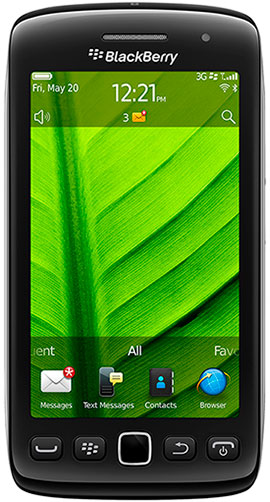
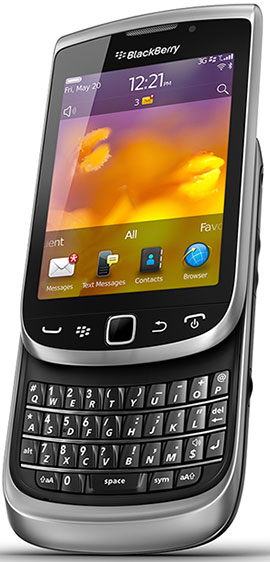
A consortium of six major tech players calling themselves "Rockstar Bidco" won a US$4.5 billion bid for 6,000 Nortel (NYSE: NT) patents in June. The deal closed last week, but all is not said and done, according to a report in The Wall Street Journal. The Department of Justice reportedly intends to ask the consortium members -- Apple (Nasdaq: AAPL), Microsoft (Nasdaq: MSFT), Research In Motion (Nasdaq: RIMM), Ericsson (Nasdaq: ERICY), Sony (NYSE: SNE) and EMC (NYSE: EMC) -- just what they plan to do with their new patent stash.

Generally speaking, the Nortel patents mainly support 4G and WiFi technologies -- areas that are vitally important to Google (Nasdaq: GOOG), creator of the Android operating system, and virtually every other wireless vendor.

The agency did not respond to the E-Commerce Times' request to comment for this story.

It could be that it fears the portfolio will be used to support patent litigation -- now the weapon of choice among wireless and mobile device providers -- aimed at Google, which lost out to Rockstar Bidco with its $3 billion-plus offer.

Perhaps Google also has this concern in mind. The company just acquired more than 1,000 patents from IBM (NYSE: IBM). Earlier this year, Kent Walker, senior vice president and general counsel for Google, flat out said the company was gunning for the Nortel portfolio for defensive reasons.

The patents Google acquired from IBM are largely concerned with fabrication and architecture of memory and microprocessing chips, servers and routers, relational databases, object oriented programming, and a wide array of business processes, according to SEO by the Sea, which first reported the sale.

Google did not respond to the E-Commerce Times' request for comment.

Where Is Google Vulnerable?

Assessing Google's position or vulnerability regarding Android -- along with its purchase of the IBM portfolio -- is complicated, John Skinner, partner with Michelman & Robinson told the E-Commerce Times.

"The use and development of the Android software and operating system is somewhat convoluted in that it comprises both open source licenses and proprietary intellectual property," he noted.

Any lawsuits aimed at Android software butt heads with the scope and content of such open source licensing, and the presumptively valid current intellectual property that Google has in Android, said Skinner.

Despite the mix of public open source and proprietary technologies, Google does have some vulnerabilities that it clearly hopes the IBM portfolio will patch, he surmised.

"The patents purchased from IBM are perhaps being viewed as applicable to specific portions of the technology that are either not covered by the open source software or the proprietary technologies already owned by Google," Skinner speculated.

How Deep the Ocean

In truth, though, it is difficult to ascertain what is in these portfolios. "I doubt even now the consortium has a complete understanding of what it bought," Casey Griffith, senior partner with Klemchuk Kubasta, told the E-Commerce Times.

Google most likely acquired the portfolio with its own defensive positioning in mind, in his view -- and possibly the hope that it might unearth a patent that could be used offensively.

If the Justice Department is indeed planning to dig deep, "there will be depositions and formal discovery as to what the scope of the portfolio's patent is and what the consortium's intentions will be," Kelly Kubasta, also a senior partner with Klemchuk Kubasta, told the E-Commerce Times, adding that it's possible it might place limitations on what the consortium can do.

"If this group of patents were to be licensed on a nonexclusive basis on fair terms it probably wouldn't be an issue at all," Kubasta said, "but since Google is not part of the consortium and if they are excluded while everyone else is allowed to cross-license -- that is where the problem might be."

Reviews » Capture for iPhone Puts Johnny a Little Closer to the Spot

Posted by echa 12:18 PM, under | No comments

Capture is a video camera app that doesn't add special creative filters or enable artistic adjustments. Instead, it offers a shortcut to video capture. The iPhone's main Camera app often takes a few seconds to get going, and when video-worthy action is taking place right in front of your eyes, those seconds count. Capture cuts straight to recording video from the instant the app is started.

Capture, an app from Sky Balloon, is available for 99 US cents at the App Store.
Capture for iPhone
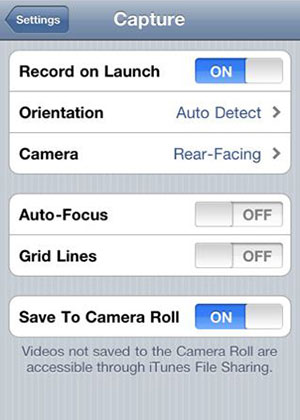
The settings window for Capture for iPhone


Depending on how often you find yourself in bizarre, hilarious or thrilling situations, many events in life deserve to be caught on video. But the unexpected moments tend to pass right by, undocumented, simply because it's usually pretty cumbersome to whip out a video cam and get it going in time. Unless you've already got a camera in your hand with your thumb on the Rec button, that ridiculous person / automotive near miss / crook (or cop) behaving badly will never be digitally immortalized.

Consider the steps you have to go through to start recording video on an iPhone:

  1. Bring up the lock screen.
  2. Slide to unlock.
  3. Passcode, if applicable.
  4. Find the Camera app.
  5. Wait for the camera app to pull itself out of a coma.
  6. Switch to video.
  7. Wait for the app to slap the video recorder awake.
  8. Hit record.

If whatever spontaneous thing you wanted to record is still going on, there's a very good possibility that the best part is now over. So what are you going to do? Just remember it with your own squishy little brain? Pah! Nobody will believe it. Vids or it didn't happen.

Short of implanting CCTVs in our eye sockets, there are ways to be a little more on the ball when it comes to fast-draw videography. One is an app called "Capture."

Roll Tape

A few months ago I looked at an app called "Precorder." Essentially it's an app that constantly keeps a buffer of whatever went on in the previous few seconds. Cue up the app, point it at something that might be worth looking at soon, and when something happens, hit Record. The recording that's created actually begins several seconds before you hit the button.

It's basically just a way to avoid filling your phone with useless footage. Because it just uses buffering rather than certifiable magic, Precorder can't actually record events that happen when the phone's in your pocket (I mean, it can, I guess, but it'll just record them from the point of view of the inside of your pocket).

Capture doesn't do magic tricks either, but it does get to the business of recording much faster than Precorder or the iPhone's own Camera app. The idea is dead simple: When you launch Capture, it starts rolling video. There's no fooling with buttons, no having to tell it whether you want this kind of image or that, no waiting for a virtual iris to open up. It just starts recording. A one-second lag is the longest I've had to deal with so far.

And when you close the app with the Home button, it stops. The video is sent to your Camera Roll immediately, and it comes through in 720p, 29 frames per second.

Austere Interface

Obviously, this doesn't eliminate all of the steps outlined above, but it will take care of steps 5, 6 and 7. If you opt not to lock your phone with a passcode, 3 is eliminated. And if you absolutely, positively must have a hair trigger on your video cam, you can give Capture a place of honor on your iPhone's bottom dock, eliminating step 4. There, now an eight-step process has been whittled down to three, and maybe you were able to catch the action while all those watermelons were actually exploding, rather than the grisly aftermath. Worth a buck to you?

Capture may be simple, but it does allow for a few settings and adjustments. In the app itself you have the option of turning the LED flash on and off (iPhone 4 only). And you can manually stop and resume recording without exiting the app.

That about takes care of it for the main interface. In the iPhone's top-level Settings menu, other options are present. You can turn off the Record on Launch option (though that would kind of defeat the purpose), toggle the default orientation (autodetect or any of the four main orientations), and pick which camera to use (front or rear-facing). You can also toggle autofocus and grid lines, and opt to save to Camera Roll or to the app's own memory (in which case you'll offload videos through iTunes).

Bottom Line

Capture doesn't add special features to the iPhone's video camera or offer creative filters or image enhancements. It just makes quick-draw videography that much easier.

You never really know when something amazing's going to happen right in front of you that you'll want to have on video. But if you put yourself in a situation in which the odds are raised significantly (concerts, big events, the championship "parades" that happen each and every time the Lakers win the big one), then consider loading your phone up with Capture and giving it a seat on the main dock -- at least temporarily.

Mobile Tech » RIM Blazes Into Smartphone Market With New Torches, New Bolds

Posted by echa 12:07 PM, under | No comments

RIM Blazes Into Smartphone Market With New Torches, New Bolds | RIM Blazes With five new smartphones debuting at once, it may seem as though RIM is throwing everything at the wall to see what will stick -- but one thing it's already stuck on is a couple of old names: "Torch" and "Bold." That seems a risky strategy for a company that's been lagging seriously behind the leaders in the smartphone market. Still, the phones have new functionality and a new OS, and early reactions seem positive.

Research In Motion (Nasdaq: RIMM) announced five new smartphones based on its new BlackBerry 7 operating system on Wednesday. AT&T (NYSE: T), Sprint (NYSE: S) and U.S. Cellular will all get new devices that maintain some of the feel of earlier products while offering functionality competitive with the leading smartphones on the market.

BlackBerry Torch 9850/9860 | BlackBerry
BlackBerry Torch 9850/9860
AT&T will get the BlackBerry Torch 9810, which looks similar to the existing AT&T Torch. The Torch 9850 and 9860 will be available for AT&T, Sprint and U.S. Cellular. These represent RIM's newest stab at touchscreen technology, and the company claims they respond five times faster than earlier models. The screens, which use Liquid Graphics technology, are also larger.

In addition, RIM introduced BlackBerry Bold 9900 and 9930, its thinnest phones. They feature a traditional Blackberry keyboard and near field communication.

All five phones run the BlackBerry 7 OS, which is not compatible with earlier models. The platform comes with preloaded apps and integrated functionality for increased productivity and collaboration. RIM says browsing on the new line will be 40 percent faster than on its BlackBerry 6 models.

T This new generation of BlackBerry handsets will be available from carriers around the world starting in late August. Exact dates will be announced in joint releases with the carriers.

RIM did not respond to TechNewsWorld's request for comments by press time.

Stacking Up to the Competition

In the past, RIM has avoided direct competition with the leading smartphones, a strategy that coincided with a steep loss of market share in North America.

"I think for a long time, RIM has been a bit complacent and has not fully acknowledged that it completes directly with the likes of Apple (Nasdaq: AAPL) and Android phones,"Allen Nogee, principal analyst for wireless technology at In-Stat, told TechNewsWorld.

"But recently I think that has changed, and RIM is now making devices which are much more competitive with other devices out there," he noted. "For example, the processor speeds were always much lower on RIM devices than on competitors' phones. That has changed, and they are now getting on parity with others."

While RIM was in a huddle to make these changes, many enterprise users were asking their employers for the slicker iPhones and Droids.

"Even a large number of enterprise customers are starting to move over to other devices," said Nogee. "BlackBerry messenger and faster processors, it is hoped, will better compete with other devices."

New Phones With Old Names

BlackBerry Torch 9810 | BlackBerry
BlackBerry Torch 9810
The new devices come with familiar, if not tired, names. While the new line of smartphones are a significant leap ahead in functionality, RIM has retained the existing brand names, "Torch" and "Bold."

"I think by keeping many of the names the same as the past, RIM is attempting to take advantage of its heritage and build upon that," said Nogee. "Like 'Droid' or 'iPhone,' companies have learned that customers want refined devices and not just new devices."

Using existing brand names for the new smartphones is also a new strategy.

"This their first new device under an old name," said Michael Morgan, senior analyst for mobile devices at ABI Research.

"I'm confused about why they did that," he told TechNewsWorld. "Every one of these has an upgrade. They have quite a bit of processing power. RIM tried to enhance all of the graphics. They really want to make it snappy -- to give you that smooth, fast scrolling experience."

RIM is keeping some of the look and feel of the Torch and Bold even as it adds new features.

"Bold looks and feels like you've always known it, but it will now have enhanced functionality. Torch is still going, but this one is more of a quintessential smartphone," said Morgan.

The new BlackBerry 7 OS will force the purchase of new devices, he pointed out. "All of these are going to work on 7 OS, not 6 OS."

Enterprise or Consumer?

With the new functionality, RIM's offerings could be competitive with leading consumer-oriented smartphones, but the company has a mixed record when it comes to attracting consumers to its traditional enterprise market. So who is it targeting?

BlackBerry Bold 9900/9930 | BlackBerry
BlackBerry Bold 9900/9930
The enterprise, according to Morgan.

"What they tried to do is retain the base they already have," he explained. "They're keeping this familiar while trying to enhance the experience that is already BlackBerry."

However, the young user is the target demographic, in Nogee's view.

"It's definitely the younger, more active device users that they have lost in large numbers in recent years," he said. "BlackBerries started as a purely enterprise device, but RIM was successful in bringing the BlackBerry to the masses. Then Apple and Android came on strong and took away many of those newly acquired customers -- and then some."

Ramping Up the Apps

RIM needs to quickly grow a flurry of new apps or upgrade its BlackBerry 6 OS apps, suggested Morgan.

Since older devices cannot be upgraded to the new operating system, "they going to be moving people to new devices for 7 OS," he said.

New apps could add a new layer of sheen to the Torch and Bold lines. Even with a new sheen, though, RIM will be facing new competing devices as the holiday season draws near.

"RIM's line is old. When it was released, it was a bit below maximum horsepower," said Morgan. "Now they're taking their existing feel and giving it today's maximum horsepower. But a lot of the big players will be releasing new phones around the same time, in time for Christmas."

Mobile Tech » Apple Reaches Global Smartphone Summit

Posted by echa 11:47 AM, under | No comments

Apple Reaches Global Smartphone Summit | Apple Reaches Apple has climbed onto the top perch in the global smartphone market and is sitting pretty, although its competitors will likely do their best to knock it down a peg. Samsung has a strong wind behind its back, and good give Apple a serious run. Meanwhile, Nokia and RIM have faltered badly, but both companies are scrambling to regroup and may be able to offer serious competition in the not-too-distant future.

Apple (Nasdaq: AAPL) is now the world's largest smartphone manufacturer in the world, according to new IDC statistics. Its iPhone accounted for 19.1 percent -- or 20.3 million -- of the 106.5 million devices shipped around the world during the second quarter.

Following Apple is Samsung, with 16.2 percent of global shipments, and then Nokia (NYSE: NOK), with 15.7 percent. Nokia held the top spot a mere year ago.

RIM and HTC brought up the rear.

Samsung Nipping at Apple's Heels

Apple's dominance is by no means secure, IDC analyst Ramon Llamas told MacNewsWorld. While the iPhone is clearly very popular, Samsung could easily minimize the gap between the companies with a few well-placed strategic moves.

Samsung "has a broad and deep portfolio with a strong brand," he noted, "and from a quality point of view, no one complains about its devices."

Also -- and this will perhaps be key to Samsung's success in any head-to-head competition with Apple -- it is going into the mass market, said Llamas.

Indeed, Samsung's momentum is strong now, perhaps even stronger than Apple's, based on IDC's figures.

Apple's rate of growth in terms of global market share was 141.7 percent, compared with the same period last year. Samsung's was 380.6 percent.

Whither the Competition?

Though lagging, Nokia is a company in transition. Until it solidifies its management and product strategy, it is difficult to say what the company needs to do to regain its momentum, Llamas pointed out.

The key to RIM's resurgence will be in the overseas markets, he continued. "RIM's value proposition is its messaging platform, a technology that is very popular overseas."

What RIM needs to do is develop more stickiness around its platform and add some sex appeal to its devices, which are typically called sleek or cool -- but never sexy, observed Llamas.

"There's a difference," he remarked.

Apple's Advantages

From another perspective, what Apple's competitors do isn't as significant as Apple's clear advantages in the market right now, Azita Arvani of the Arvani Group told MacNewsWorld.

"There are three main reasons why Apple did so well in the quarter," she said. "It had an impressive expansion of carriers and geographies -- 42 new carriers and 15 new countries."

Its China operations are doing well, having posted US$3.8 billion in revenue, and Apple store revenues in general were up 10 percent year over year, she noted. The company also plans to add an additional 30 new stores.

A General Road Map

If any manufacturer is going to overtake Apple, it will need to focus on the areas where Apple is weak, said Llamas. That would be the mass market, which Apple has traditionally shunned.

"Feature phones are dropping in popularity, yes, but not everyone wants a high-end smartphone device right off the bat," noted Llamas.

There is strong demand for midpriced smart devices, he said.

At the same time, a manufacturer will have to compete against Apple's strengths.

"It will have to have something for the high end of the market," said Llamas, "and a broad and deep portfolio would help tremendously."

Mobile Tech » TouchPad's Weekend Blowout Sale: Make It Permanent?

Posted by echa 11:44 AM, under | No comments

TouchPad's Weekend Blowout Sale: Make It Permanent? | TouchPad HP attempted to woo tablet buyers with a heavy discount on its TouchPad webOS device last weekend, nearly halving the price on the product, which first hit the market just a few weeks ago. While it may have caught some consumers' attention, will a temporary price cut really be enough to help the TouchPad gain traction against the similarly priced Apple iPad?

Shoppers for HP's (NYSE: HPQ) TouchPad tablet were treated to a special bargain over the weekend -- after coupons and promotions, the 16 GB tablet was available for US$299, a $200 drop from its original price.

The price cut came relatively early in the device's life on the market.The TouchPad debuted in June to a largely chilly response. Many first users liked the virtual keyboard, multitasking capabilities and webOS operating system, but they felt the design was cumbersome. The most common complaint was the lack of apps.

Like every tablet, the TouchPad faces the burden of being constantly compared to the iPad, especially because the two products start at identical price points. HP's bargain on the TouchPad was only available for the weekend, but it could be an indication that prices will need to be kept lower in order to stay competitive.

HP did not respond to the E-Commerce Times' request for comment by press time.

Marketing Strategy

It's not uncommon for prices to fluctuate greatly among PCs, or for companies to offer short-term deals in order to get consumers talking about a product.

"In PCs, pricing is typically discounted fairly often. Apple (Nasdaq: AAPL) is an exception in the way they have a stranglehold on keeping the price constant," Richard Kugele, analyst at Needham & Company, told the E-Commerce Times.

With the TouchPad, though, the product may suffer without a consistent lower price. Many customers likely would choose the iPad over the TouchPad if the two were the same cost.

"Consumers buy iPads not only because they are extremely powerful, elegant gadgets with tens of thousands of apps, but also because they are Apple devices, with all the cachet thereby implied. Coming in with higher specs but at the same price and no apps is a recipe for no share, in our view. The stakes here are high," Kugele wrote in a note.

Keeping the price more affordable is alluring not only to customers, but also to the developers HP is hoping to draw to the platform to improve its webOS app selection.

"With the network effect of more users attracting more developers attracting more users, we believe it's appropriate, or even necessary, for HP to use price to drive adoption," Jayson Noland, director and senior analyst at Robert W. Baird, told the E-Commerce Times.

Stakes High for WebOS

HP also needs the TouchPad to stay competitive in the tablet market to continue to develop a consumer base for its newly acquired webOS platform.

The promotion was all about building new relations though webOS, according to a tweet from Stephen Dewitt, head of the business unit for webOS at HP.

The company needs to get tablets in customers' hands in order to introduce the platform and to help it attract popularity and developers. Users have been receptive to the platform so far, so the lower price is key to developing the base further.

"We like webOS and believe the market would welcome a portfolio of solid, low-cost tablets as an alternative to the iPad," said Noland.

Related Posts Plugin for WordPress, Blogger...